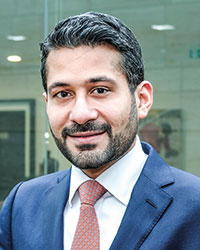
Global Head of Capital Structure & Rating Advisory (CSRA), Standard Chartered
Corporate Capital Planning in a Fragmented Environment
How are corporate capital strategies being shaped in a changing geopolitical environment? Shoaib Yaqub, Global Head of Capital Structure & Rating Advisory (CSRA), Standard Chartered, considers the key findings from bank’s CSRA Annual Insights 2026 report.
Treasury priorities are still anchored in risk, but that mindset is starting to shift.
This is one of the key findings from Standard Chartered’s CSRA Annual Insights 2026[1] report, which polled more than 350 global corporates across 19 sectors to identify key themes shaping strategies this year.
FX and rates still remain top of mind, with 56% and 47% of corporates respectively ranking them as their primary concern, albeit both slightly down year on year[2]. Of greater significance is the move in working capital, now at 49% and up five percentage points, indicating that focus is expanding beyond pure hedging to how cash is actually managed through the system.
This is happening against arguably a more uncertain macroeconomic backdrop. The global outlook remains cloudy, and corporates are responding by widening the resilience toolkit. Supplier diversification and expanding export markets are increasingly evident, reflecting a more operational response to disruption. Liquidity is also being treated more actively, although it may seem otherwise. While 49% of companies expect to maintain their current cash buffers, a slightly higher share are explicitly balancing that with working capital efficiency. Cash is no longer just a buffer; it is being strategically managed as a lever.
Notably, this isn’t translating into an overall defensive stance. Growth is firmly back in play. Only 21% of corporates are looking to reduce leverage, while 57% are using new debt to fund expansion and 51% are directing surplus cash into capital expenditure (CapEx). More than a quarter of firms will also accept a rating downgrade if the underlying opportunity justifies it, which points to a more flexible view of ratings as part of the planning.
At the same time, longer-term priorities are holding firm. ESG continues to feature in the core agenda amid an evolving political landscape, with close to 40% of corporates perceiving it as relevant to ratings and actively managing it, up nine points year on year. Around 30% are planning to increase green or transition CapEx. Even in a more dynamic environment, there is no meaningful pullback here. If anything, the trend is becoming more deeply entrenched reflecting that sustainability is not being treated as a discretionary overlay but a core component of corporate investor narrative, as well as stakeholder engagement.
Taken together, the shift is less about moving away from risk and more about how it is being balanced. The approach is increasingly deliberate – corporates are maintaining resilience where needed, sharpening efficiency where possible, and deploying capital with more intent where opportunity is clear. That applies across liquidity, leverage and investment decisions.
For treasury teams, the practical takeaway is straightforward: continue to manage core financial risks, but that alone is not sufficient. Working capital is an increasingly important lever and should be managed accordingly. Where capital allocation is concerned, the focus should be on clarity of trade-offs rather than rigid, and often conservative, constraints. If the returns justify it, the market is accepting some flexibility on leverage or ratings.
Overall, capital strategy is becoming more active again. The environment is still uncertain, and the companies that navigate this well are likely to be the ones who remain disciplined on risk, while deploying capital with intent where the opportunity is clear.