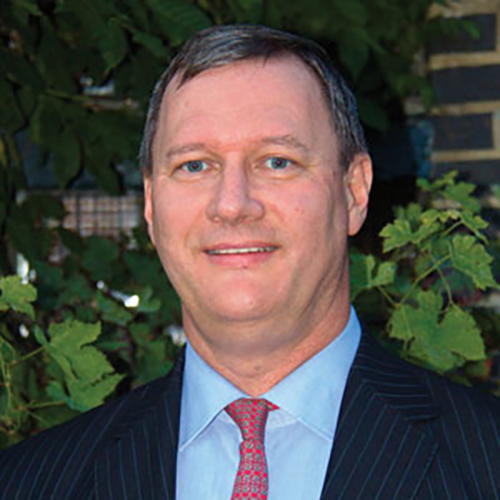
- Luc Vlaminck
- Former Group Treasury and Corporate Affairs Director, Remy Cointreau
An Interview with Luc Vlaminck, Group Treasurer, Rémy Cointreau
One of the best things about interviewing for this feature is being reminded every month that treasurers are fascinating people with a cornucopia of interests and motivations, quite beyond the normal cycle of daily cash positions and month end reporting. As Helen Sanders, Editor, illustrates, Luc Vlaminck, Group Treasurer of Rémy Cointreau, is a case in point.
How did you come into treasury and what attracted you to that profession?
My first commercial role was in the budgeting department which was part of the company’s accounting and forecasting function. I then joined SWIFT, which at that time was creating a treasury department, and was looking for people with corporate knowledge. This was my first step in treasury, and I was absorbed by the forward-looking approach and broad reach of activities. This inspired me to study at post-graduate level to increase my professional knowledge, and together, the combination of practical experience and academic study formed the basis of the treasury career I have followed ever since.
How did your career progress through to the role that you hold today?
I spent fourteen years at SWIFT, manly in treasury, and was then offered the role of European treasurer at UCB, a pharmaceutical company headquartered in Belgium. After a further seven years, I joined Ingram Micro as European treasury director. I spent four years there, at which point I joined Rémy Cointreau as group treasurer. At that time, now eight years ago, the company was setting up a global treasury centre in Brussels, and asked me to set up this centre and centralise the group’s treasury activities.
Having worked in different industries, there is a certain logic to being part of the wine and spirits industry, which is one of my passions: I find it very motivating, and rewarding, to bring my professional expertise and passion together. I bought a small vineyard recently, which has allowed me to understand the wine industry in more detail: what the steps are to making (good) wine (I hope!) and an appreciation of all the work that goes into it. While it is important that treasurers stay close to the business of which they are a part, I have perhaps taken this to a further extreme than most!
How have demands and needs in terms of treasury changed over the course of your career, and what particular skills does it now require?
The treasury basics remain the same but the treasury role has matured and become more strategic within the enterprise. When I first joined treasury, it was a largely tactical operation and segregated from the rest of the business. This is no longer the case, and the more strategic the role that treasury fulfils, and the closer its integration with the wider business, the more sophisticated it has become. There are other factors too that are impacting on the skills and knowledge that treasurers need to acquire and develop as they take on more senior positions: firstly, to understand and recognise the impact of evolving technology and regulatory demands; secondly, to appreciate cross-functional issues such as the legal and tax implications of treasury decision-making.
What is your greatest professional achievement to date and why?
I have been fortunate in my career so far in that I have been in roles that have allowed me to be successful, to learn, and to train the next generation of treasurers. These are all vital as you progress through your career, particularly the responsibility of passing on experience and expertise to treasurers who are at an earlier stage. I find it vey rewarding to see people who I have trained holding senior positions and flourishing in their careers.[[[PAGE]]]
What qualities do you look for when you are recruiting for your department?
A good quality education is the first thing, but secondly, I look for flexibility. Treasury is an environment that changes very quickly and very frequently, so it is important that people joining the team see change as an opportunity, not a constraint, and are not fearful of the unknown.
How important do you think a formal treasury education is, as opposed to (or as well as) more general finance qualifications?
Switching from a theoretical education at university to the real world where you get your hands dirty and gain on-the-ground experience is not easy, but a balance of theoretical education and practical skills is important. In markets such as the UK, the specialist treasury education market, championed by the ACT (Association of Corporate Treasurers), is more advanced than in mainland Europe, so we tend to have more of an emphasis on internal training instead. The advantage, however, is that this is easier to put theory into practice in a real-life situation.
Based on your career so far, what would your advice be to finance professionals who are perhaps in their first treasury role?
Be curious, and look at the full range of opportunities and tools that are available to treasurers. In a multinational business in particular, the role of treasury is often very broad, so you can learn a lot beyond your direct area of responsibility, which in turn will help your career. It’s important to be patient, however, you can’t learn everything overnight, and building experience is like building a wall, brick by brick.
What would your ideal holiday be?
Ideally, it would be somewhere very quiet, where I can take plenty of books, music and good Cognac or Whisky.
What book have you read recently or what film have you seen recently that you would recommend, and why?
I enjoy books that combine reality and philosophy, that bring new ideas that strike a chord with me. For example, a book that particularly resonated with me recently is Michel Onfray’s book Cosmos.