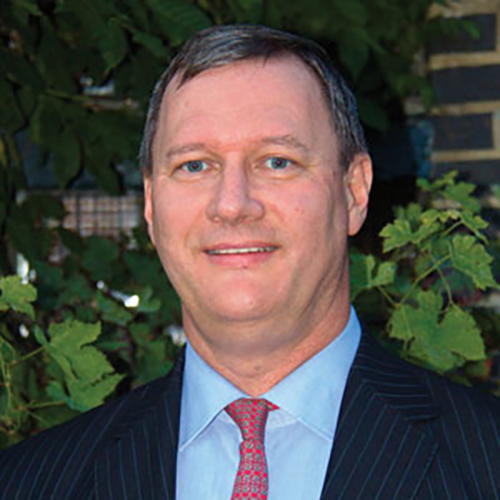
- Luc Vlaminck
- Former Group Treasury and Corporate Affairs Director, Remy Cointreau
- Tom Alford
- Deputy Editor, Treasury Management International
My Life in Treasury
Having accumulated a wealth of experience and knowledge over four decades in treasury, Luc Vlaminck may have recently hit the retirement button, but he remains as dedicated as ever to maintaining community spirit both in and beyond his chosen profession.
When four decades pass between first signing up to a profession and finally stepping down from it in retirement, even an occupation as rock solid in its fundamentals as treasury will have generated some notable changes.
Most recently employed as Group Treasury and Corporate Affairs Director at Rémy Cointreau, the longevity of Vlaminck’s career has enabled him to witness a “continual evolution in terms of the practicalities, processes and technologies of treasury”. Indeed, when he took on his first treasury role back in 1981 – as a treasury assistant at Swift – he recalls that very basic computing tools were only just taking off. Roll forward to the end of his tenure in treasury, and he notes how the function is ramping up its exploration of technologies such as AI that back in the beginning would have seemed like pure science fiction.
Indeed, while few at the outset of that period would have foreseen the degree of progress to date, Vlaminck takes a cue from his long-held belief that treasury “should be looking forwards more often than it looks backwards”. Treasurers, he argues, should be anticipating major changes, not just in technology but in all its interests, from the legal and the regulatory, to the increasing internationalisation and centralisation of its activities. “Today, the treasury role has taken on another dimension,” he declares. “It’s becoming a bigger part of the setting and evolving of corporate strategy.”
As a key part of that progress, treasurers are more able now to gain an audience with senior management and the board, says Vlaminck. “This had not been an easy exercise, but I believe the various crises we went through demonstrated to senior management that treasury needs to be integrated within the overall risk analysis process. It was seen that treasury can help in shaping the strategy, ensuring the organisation is sufficiently flexible to cope with a broad spread of commercial, and geopolitical threats.”
For the treasurer, being a useful ally in this context demands experience. A junior coming into this profession needs to acquire knowledge of the basics before playing on the international scene, notes Vlaminck. But once the basic competencies are there, it’s important to develop the analytical skills, and to remain curious about all the other areas of the company.
This covers finance but also fields such as marketing, sales, procurement, and legal. “The aim is to build a global view of what impact treasury can have on the whole corporate function because when it comes to strategic development, the treasurer needs to understand and connect the consequences of any actual or planned changes across the business.”
While treasury has always managed a high level of responsibility, Vlaminck notes that today, that level of responsibility has increased many times over. “It’s taken a number of crises to put it into that position, but it’s certainly now happening.”
And technical skills aside, he says that the furtherance of treasury could not have happened without one additional core asset. “It’s vital for the treasurer to know how to manage a team. This is not just about treasury ensuring its advancement within the wider corporate setting, but also managing how it engages with, and is perceived by, third-party partners such as the banks, vendors, and credit agencies.”
Discovering the exciting reality
Naturally, it takes time to achieve a strong presence in a professional setting. This might suggest a determined path from the outset. Not so for Vlaminck. “It was pure opportunity,” he says of his first steps on a career path, as an assistant treasurer with Swift. “When I started there, I was in charge of the accounts payable department. But there was an opening in treasury and the Director of Treasury at the time said, ‘Why not jump in?’, so I did.”
With only a basic idea as to what treasury actually did, Vlaminck soon discovered the exciting reality of the role. It proved such a good move for him that he stayed for 14 years, starting with the fundamentals and building up a deep knowledge of treasury and all its nuances.
The next period of his treasury career saw Vlaminck move across a variety of industries, taking in financial services, chemicals and pharmaceuticals, IT, and finally into wines and spirits. Each step was made easier by the fact that he never applied for any of these jobs. “They always asked me, which is probably a good sign,” he muses, before adding that in each move “I saw the opportunity, and took it”.
An interesting conclusion Vlaminck draws from his broad experience is that the size of a business, certainly in terms of metrics such as revenue, makes far less difference to the treasurer than its structural makeup. To illustrate this effect, he compares the complexity of his work as Group Treasury and Corporate Affairs Director, Rémy Cointreau with its €1bn turnover, with that of his role as Senior Director of Treasury, Europe, with $30bn US IT firm, Ingram Micro, and notes little difference. The challenges in both, he notes, stem mostly from their deep internationalisation.
While Vlaminck believes that it is not a requisite to bring prior industry knowledge to a new employer, he nonetheless insists on the importance for an incoming treasurer of quickly grasping how that business operates. “Of course, it’s a plus for a treasurer to have prior industry knowledge,” he acknowledges , “but what’s more important is their curiosity”.
It is this curiosity that, he feels, should drive any treasurer new to a company to learn about the industry in which they will be operating. It matters, he says, because only when armed with a robust knowledge of its constraints and opportunities can the treasury function fully adapt and evolve to those needs. “While accountants look back to ensure the past is perfectly reported, treasury must look forwards and anticipate change because its biggest challenge is to prepare the function for the evolution of the company. And the key attribute of curiosity needs to be directed not only at treasury and finance but at what other functions are doing.”
By examining the needs of marketing, product development, sales or procurement, and discovering the constraints that these functions may experience, treasury can more effectively plan ahead. It can begin exploring how these activities or circumstances may impact future demands on treasury, but also reveal how treasury can best assist these functions with new facilities or payments channels, for example. “Once you start probing, the scope is almost unlimited,” notes Vlaminck.
Retaining human control
In a treasury career spanning four decades, there will be many moments where lessons may be learnt. For Vlaminck, one such event was the introduction of the euro as an accounting currency in 1999, and as physical cash in 2002.
As European Treasurer at UCB, and Deputy Chairman and Treasurer of the Association of Treasury Experts in Belgium (ATEB) at the time, he reflects on the need then for companies to heavily invest in updating financial systems, and engage with complex price adjustments. And, simultaneously, tackling a whole host of contractual and legal adjustments. “It quite drastically changed the landscape,” he comments.
Having delivered on that front, and taken an active part in the consultation process prior to the introduction of the SEPA Instant Credit Transfer (SCT Inst) scheme (launched by the European Payments Council in 2017), Vlaminck recognises the value of engaging with the regulatory landscape. Indeed, he says, it’s more important now for treasurers to acquire at least a basic level of legal competency. “When you’re working with finance contracts, for instance, their regulatory content has to be understood and managed. If you fail to grasp it, you could be putting your company at risk if an issue arises.”
Having already referenced the amplified complexity for treasurers inherent in the internationalisation of a business, Vlaminck further notes that any treasury team in this position should not just be focused on meeting home-market specifics but also be prepared to acquire ‘overseas competencies’. “Flexibility of approach was always something I looked for in colleagues,” he remarks. “It meant I could place them in different positions and preserve the continuity of treasury coverage across all our territories.”
This was part of an unusual approach, as a manager, that saw Vlaminck assume responsibility not only for ensuring all treasury colleagues had the skills to perform their roles within his team but also that they were employable within treasury anywhere else. “The job market is so hard sometimes,” he acknowledges. “If an employee needed to find another job, I wanted to know that they were suitably equipped to move on.”
Treasury’s relationship with technology is clearly another area subject to rapid change. But for Vlaminck, there is one IT rule to which all treasurers must adhere. “No matter what stage of evolution that technology has reached, or the help that you believe it will provide, the final control should always remain in human hands. As treasurers we must be able to take a step back, and see, even in the most automated of processes, how human control can and should still be exerted.”
Indeed, Vlaminck believes treasurers should retain a critical faculty regarding this relationship, not least because although he feels a wholesale “handover of treasury to the robots” is some way off, he is fully aware that the appeal of technology to the treasurer also drives its appeal to the fraudster.
Living the role
While a firm grasp of treasury fundamentals is non-negotiable for Vlaminck, those taking on the role would benefit from experience in other areas. He sees learning as a lifelong opportunity, and consciously seeks out expert views and influential thinkers across related fields. He has also enthusiastically engaged with related industry bodies.
Becoming an Oversight Committee Member of the European Money Markets Institute (EMMI), for example, proved to be a rewarding encounter for him. EMMI is banker-led, with a couple of seats open to corporates, aimed at drawing unbiased oversight of all aspects related to the provision of the Euro Interbank Offered Rate (Euribor). “It gave me access to experts from different areas of the financial sector. But having a corporate view kept governance to the fore, provided a reality check for its decisions, and retained the balance between the providers and users of these rates.”
Even closer to home, between 1991 and 2014, Vlaminck was Deputy Chairman of ATEB. As a founding board member, he was very much instrumental in creating this successful body.
One initial aim, he explains, was to create a “structured and active community” within which treasurers operating in the country could confidentially share their knowledge and experience, away from the gaze and influence of third parties such as banks and vendors. It’s an objective that he feels “has been attained quite easily over the years”. A second aim has always been “to ensure this community of treasurers stays ahead of the game” in terms of constantly evolving variables such as regulation and technology.
Having stepped down from ATEB – partly to afford him time to focus on an additional role he took on within Rémy Cointreau as its Corporate Affairs Director (a position he says absorbed almost 80% of his time) – Vlaminck declares that the next generation of its leaders is now on board “and doing a wonderful job”. With ATEB now a member of both the European Association of Corporate Treasurers (EACT) and the International Group of Treasury Associations (IGTA), “another dimension of learning for the members” is opening up.
Meanwhile, Vlaminck’s own accumulated knowledge has enabled him to take on a lecturer role with ICHEC Brussels Management School in Belgium, and to deliver guest lecturer sessions at ESSCA School of Management in Angers, France. However, while he clearly acknowledges the merit of academic endeavour, he notes certain aspects of treasury demand front-line experience, especially when handling crises. Indeed, he declares that the value for treasurers of active service cannot be overstated. “Quite simply, you need to live the role; it cannot all be learned in a text book.”
Giving back to the community
The desire to see others benefit from his experience is something that informs Vlaminck’s voluntary work as a board member and Vice President of Belgian not-for-profit organisation, Goods to Give (G2G). Although the past two years had seen his time largely absorbed by his employed work, having retired from this at the end of January 2026 he now fully intends to step up his involvement with G2G.
Created around 13 years ago with a group of treasury professionals, Vlaminck says G2G provides essential everyday non-food products for people in need. Every year, more than €100m worth of new, non-food consumer goods go unsold in the Belgian retail sector. “We developed a logistics platform through which we can collect these products direct from their producers, and then redistribute them to local on-the-ground organisations. They can then be given directly to people facing hardship,” details Vlaminck.
The people in receipt of the goods may have lost their job or home, for instance, and be struggling just to get by, especially in these difficult times. “I’ve been lucky enough to have a very interesting and rewarding career,” he says. “G2G is one way for me to give back to a society that has been good to me.”
In retirement, Vlaminck admits that he will also continue to follow the evolution of the treasury world. “After so many years, I couldn’t just cut the cord completely. I still have many friends in treasury.” That said, he has a keen eye on the golf course, more cycling, and there will be a lot more time for leisure travel. “And then I’ve got another passion, which is wine,” he reveals. But, he adds, this is not just about enjoyment. “I’ve invested in wine production.”
Stay curious, be mobile
Anyone venturing out into the world of work, and perhaps looking to come into treasury, would be hard pressed to find a better source of guidance than Vlaminck. While he insists he has no wish “to play the guru”, his suggestions nonetheless possess a deep truth.
“Stay curious and be ahead of any evolution,” he urges. But perhaps unexpectedly he advises those starting out not to stick solely to treasury, at least initially. “There are so many other aspects to discover within the corporate world that could help you to do your job better than if you just execute treasury processes.”
But perhaps this is not so surprising coming from Vlaminck. After all, he says, the more understanding there is of other roles, the easier it is to build a stronger community.