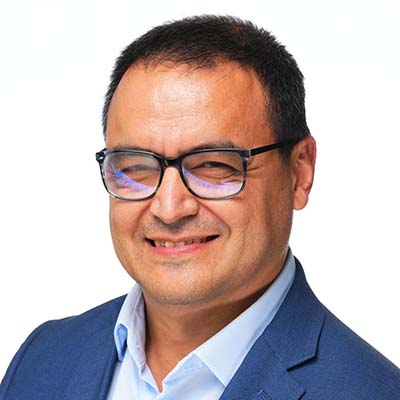
- Barış Gökalp
- Treasury Director, Şişecam
- Tom Alford
- Deputy Editor, Treasury Management International
As a trained engineer and committed technophile, Barış Gökalp, Treasury Director, Şişecam, understands how embedding digital processes into treasury operations can move the function several steps forward. Here, he tells TMI how, throughout his career, he has recognised the need to continue evolving to deliver the best results.
Gökalp leads the global treasury operations for one of the world’s leading glass and chemicals companies. His responsibilities within this set-up include all the usual components of an international concern. But he also drives the organisation’s digital treasury roadmap, “with the aim of ensuring that technology and data driven decision-making are fully embedded into every part of our operations”. He is indeed a digital ambassador in a treasury hat. But technology is no gimmick for him.
In managing and overseeing treasury across 47 plants in 13 countries, Gökalp is spearheading a dedicated team of 20 professionals under testing circumstances. “Treasury today faces a combination of volatile markets, geopolitical uncertainty, and rapid technological change,” he acknowledges. “Managing liquidity for our operation requires constant vigilance and planning, so my approach has been to strengthen automation, enhance our real-time visibility, and build resilient banking and funding structures.” Digitisation, he asserts, is a “key enabler”.
Tools of trust
Central to Şişecam’s technological approach to treasury is its TMS. “It enables us to manage all our treasury activities centrally, especially payments and risk management, even for local operations,” explains Gökalp. Debt, too, is managed centrally with a cash-pooling structure, which will be established towards the end of 2026 to help manage local liquidity. A new receivables hub is also now in the process of implementation, “in order to use our receivables for long-term financing and securitisation”. Plans are similarly underway to boost working capital management through the creation of an international procurement hub.
A system for insurance management reporting is also on the cards, steered by Gökalp. This will cover a range of needs, including insurance cover of assets, profits, and even managerial liability. The aim, he says, is to use reporting data to educate the whole highly CapEx-driven business about financial risks.
Indeed, with one furnace costing between €150-250m (depending on glass production type), and 43 production facilities in 13 countries being used, that educational piece is now considered to be a vital component of Gökalp’s treasury work today. The need is amplified because insurance and re-insurance firms frequently inspect the factories, seeking to verify that their stringent demands for robust risk management procedures and awareness throughout the company are being met.
For Gökalp, a player in this industry seeking to build trusting relationships with third parties such as insurers, re-insurers, banks, rating agencies, and even investors, needs to be transparent and communicative.
More, more, more
“Treasuries globally are being pushed to become more strategic, more digital, and more agile,” notes Gökalp of current circumstances. “Market volatility and supply chain disruptions have elevated treasury from a back-office function to a core strategic partner.” With many organisations rising to the challenge, he feels that the profession still has work to do, particularly in adopting emerging technologies and building integrated, data-driven ecosystems. “My view is that treasury must continue evolving to deliver what modern businesses require.”
Current market volatility is affecting Şişecam in two significant ways. Financially, interest rate and FX risk are high on the agenda and treasury thus manages currency against revenue depreciation and increasing costs. Şişecam is a publicly traded company, denominated in Turkish lira. With the Turkish economy currently facing higher interest rates, and with a significant portion of its revenue derived from hard currency, Gökalp says the aim is “to pursue hard currency debts, as this helps us a lot for the financing”.
But it is also important to control supply chain risks, continues Gökalp. Şişecam, he says, is constantly trying to understand the financial strength of its suppliers “because we really do see it as a chain that is only as strong as its weakest link”.
To assist, an SCF programme, built around a strong understanding of its own financial data, is already running in Turkey, Şişecam’s main market. But Gökalp says the firm wants to roll this out globally, via its planned international procurement hub, “to support its suppliers in achieving the strongest possible quality management”.
No looking back
After Gökalp graduated with a degree in industrial engineering, he discovered that the production line was not for him. Feeling more disposed towards a communication-led role, and discovering a fascination for how money markets and finance worked, he found himself gravitating towards banking. He began his career as an operations specialist and financial analyst at Turkey’s Finansbank.
Focusing initially on operations helped his engineering mind to understand the complex machinery of banking in action. “My role sat between customers and the operations centre in Istanbul,” he recalls. “From that position, I could see how customer needs were being translated into action by the bank.”
After a few years, Gökalp shifted to the corporate side. On being offered a finance specialist role at Vestel, one of the largest white goods producers in Europe, he knew his banking insight would prove advantageous. “Our business was communicating with banks. Understanding their way of thinking helped me not only in identifying our needs but also in achieving the best results.”
Arriving at Vestel felt like a steep but valuable learning curve for Gökalp. It is largely an export company, and its suppliers are mostly overseas. The nuances of import and export financing and risk management he picked up still resonate with him today.
After a couple of years in finance, Gökalp moved into his first pure treasury role with Vestel. Over the next few years, Gökalp rose up through the ranks, taking on different treasury positions in manufacturing, textiles, petrochemicals, and fast-moving consumer goods (FMCG). He arrived at Şişecam in 2015 as Group Treasury Manager, was quickly elevated to Director of Treasury, and has not looked back.
“Treasury really appealed to me from the outset because it sits at the intersection of finance, risk, strategy, and technology, and my early treasury experience at Vestel exposed me to the dynamic nature of this relationship,” he explains. “But what has kept me engaged over the years is its constant evolution, and especially the opportunities to lead digital transformation and build future-ready treasury organisations.”
Seeing the bigger picture
Unlike many other industries, glass-makers at scale tend to obey the economics of logistics; most will not ship finished goods more than 500km. A strong presence in a market therefore typically requires nearby production, hence it has so many furnaces, and its major CapEx requirement.
While this gives Şişecam’s treasury a fully international flavour, which appeals to Gökalp, the demand for localised operations also means over the years, as the company has expanded, multiple additional treasury systems have been acquired. Managing this mix to create a more unified technological treasury environment was one of his first tasks. Through his banking knowledge, communication skills, and the implementation of a new TMS (Kyriba,) he has now brought systemic growth under control.
Gökalp acknowledges that his industrial engineering background played a part – and still does – in how he approaches challenges. “It has given me the ability to see the bigger picture, and to encompass in my thoughts all the aspects of a problem,” he explains. By piecing together the components, and understanding how they can or should work as one, he is better positioned to ensure the smooth running of his treasury machine.
Of course, Gökalp recognises the importance of maintaining treasury fundamentals – “the core of treasury is the same everywhere”. But he is also equipped to quickly assimilate an understanding of each new industry, and company, he enters. While each move “has helped me to think in broader terms about my approach to treasury”, he knows that if treasury is to add value to a business, its distinctive operational dynamics must also be grasped.
Liquidity, Gökalp believes, is the lifeblood of any business, and treasury is at the heart of it, ensuring its flow is maintained and the company remains healthy. Each new setting will have its own distinct CCC. For a television manufacturer such as Vestel, a huge spike in orders is always seen leading up to a World Cup. This increases revenue, but it also increases the need for supplier finance to help meet production demands.
“Treasury has to be aware of this, otherwise it will be extremely difficult to manage,” he states. “We need to be out there, talking with procurement, production, sales, marketing, and logistics. We need to understand that if there is a huge additional procurement cycle coming up, then we should increase our LC limits, or if we’re expecting a substantial increase in receivables, then we should have the appropriate collections tools in place.”
When soft skills meet broad experience
Having worked across banking, manufacturing, textiles, petrochemicals, and FMCG, and holding both an MBA and an industrial engineering degree, Gökalp has seen first-hand how valuable crossfunctional and crossindustry experience is for the treasurer. “We touch every part of the business, so understanding operations, supply chains, and financial structures makes us far more effective,” he comments. “That broad experience also helps us become strategic partners rather than purely operational specialists.”
In achieving this status, Gökalp has brought to bear a number of key transferable skills. An aptitude for analytical thinking, and the logic of production, stems from his engineering background. He complements this with a firm grasp of risk management and financial modelling, which he developed within the banking sector and later honed in various corporate settings.
With a firm nod to the soft skills, Gökalp also values treasury competency in leadership, team development, and stakeholder management across global teams and banks. Strong communication and a willingness to be open and transparent play a vital role here, he believes.
When it comes to working closer with external partners such as banks, rating agencies, investors, and auditors, Gökalp says understanding and delivering on their information needs helps to smooth these relationships. Once again, strong communication is key, he says.
“One of the major obstacles to a good relationship is information transparency. It is essential for us to build and maintain reliable communication channels with our key stakeholders. If our external partners understand that we always try to give them the right information, and that it is accurate and timely, it stands us in good stead when it comes to us seeking urgent responses from them. They take us seriously.”
Digital advocate
With an obvious passion for digital transformation and process optimisation, Gökalp is aware that his own appreciation of technology “has enabled me to adapt quickly across industries and lead large-scale transformation projects”. But he contends that all treasurers now should “at least appreciate how digitisation can deliver huge benefits across their management activities”. This, he clarifies, should not just be about knowing what can be achieved internally, but also how external partners such as banks can achieve more with technology to assist their clients.
In declaring his “strong advocacy for digital treasury management”, Gökalp says it has always helped immensely that his efforts have received the support of senior management. “In each case they have understood that treasury is a small team, and that trying to catch every ball is not always easy,” he explains.
The initial idea behind the digital transformation at Şişecam was to explore how treasury could reduce manual activities. “If we could minimise the operational load on our team, we could begin to explore a far more efficient treasury,” explains Gökalp.
But he reveals that the transformation was never going to be a Big Bang affair. It proved wise. By adopting a policy of incremental improvement, each step demonstrated the capacity of the team to deliver a working solution and secure continued leadership buy-in. His leadership in this domain led to him being named the Adam Smith Awards Treasurer of the Year 2025, which, he acknowledges, provided independent validation of the team’s methodology and results.
In practical terms, account visibility was the first step. This led to investment in RPA and eventual full automation of payment process (and fraud detection) via the firm’s SSCs. “Everything is now digital. We initiate the payments in the ERP, it goes to the TMS, but after that there are no human touch points. That frees up a lot of treasury time, giving us more headroom to deliver strategic input,” states Gökalp.
Links in the blockchain
As a member of the management board of the nonprofit organisation Blockchain Türkiye Platform, Gökalp contributes to advancing blockchain adoption in the country. The platform is an initiative of the Turkish Informatics Foundation. It brings together industry leaders to explore how DLT can improve transparency, efficiency, and trust in financial and corporate ecosystems, he explains. “My focus is on how blockchain can enhance treasury processes, trade finance, and financial risk management.”
While the aim is clear, members acknowledge the body of work that lies ahead. “The missing part of blockchain as a solution for these processes is the lack of wider awareness and technical ability to drive it forward,” explains Gökalp. “We are trying to educate everyone across different ecosystems, and explain that it is secure, transparent, and will speed up operations in that structure.”
In the treasury space, Gökalp admits that “we need time to establish a live blockchain use case”. He offers a made-to-measure example in the import/export space. Here, corporate and financial participants work with multiple other parties, such as logistics, customs, regulation, and insurance. He feels if all start exploring blockchain, then it will soon be apparent that the improvements in security, transparency and speed – and the simple ease of doing cross-border business – will translate into the many other commercial activities in which treasury is involved.
Sharing, building, uniting
As the Founder Chairman of the Corporate Treasurer’s Association of Turkey (Kurumsal Hazine Yöneticileri Derneği, KHYD), Gökalp had witnessed a growing awareness in the country of the good work carried out by other national treasury associations across Europe. While knowledge and expertise had been naturally accumulating among Turkey’s treasury practitioners, there was no formal means of sharing best practice locally.
With the overarching aim of helping the country’s treasurers stay ahead of industry developments, and contribute to national and international financial stability, in 2021 that missing component was added with the founding of KHYD. Today, its annual meetings alone attract upwards of 700 attendees, with delegates drawn from a broad spectrum of stakeholders eager to build positive relationships.
“I believe treasury associations play a vital role in building professional standards and creating a community for knowledge sharing,” Gökalp comments. “But we’re also there to support digital and regulatory transformation and to strengthen the voice of treasurers within the broader business ecosystem.”
And while local treasury nuances persist, he believes that with many of its challenges today now common to many regions, sharing knowledge and experiences with other treasury associations is very much on the KHYD agenda – as indeed is joining forces with the European Association of Corporate Treasurers (EACT) and the International Group of Treasury Associations (IGTA).
The go-to function
“The treasurer has a more important role in the company today than just a decade or two ago,” states Gökalp. “In the end, everyone is just trying to manage the volatility, and for many companies, that task falls to the treasury.” This, he says, comes with a huge responsibility. As treasury sits at the crossroads of many corporate functions, many of these wish to secure treasury’s knowledge and support as they face their own challenges.
“It’s a good thing, certainly for me,” maintains Gökalp. “It means treasury can be aware of everything going on in the company, and that we can quietly guide the financial movements of others.”
Handling the pressure, supporting others, but then rarely basking in the limelight, is indeed all par for the treasury course. While Gökalp has transferred from one profession to another, and been able to move deftly between different industries, what would he say is the secret of treasury success?
“You need natural curiosity,” he replies. “Keep asking questions and keep learning. Treasury is evolving rapidly, and those who adapt will thrive. Try to understand what is going on the world and how it impacts your business – but don’t just focus on the financial world, explore as much as possible, because everything can change suddenly.”
Of course, for any newcomers, Gökalp advises building a strong foundational knowledge of finance, risk, and analytics. He also encourages a deep exploration of the potential of technology in treasury and beyond. “Embrace it early in your career because digital skills will define the future treasurer,” he advises.
But as a counterpoint to the power of digital, he also urges those entering the profession today to invest in developing their “emotional intelligence” and ability to foster relationships. “I wish someone had told me early on that treasury is not just about numbers,” he muses. “Although obviously they are important, it’s really about strategy, leadership, and shaping the financial future of the organisation. Ultimately it all comes down to human interactions, and these will stand or fall on the level of trust we can build between ourselves.”