

- Eleanor Hill
- Editorial Consultant, Treasury Management International (TMI)
Key Learnings from Treasury Khazana Mumbai
Treasury Khazana 2025 gathered CFOs and treasurers for a conference that moved between big ambitions and tough realities. Lively discussions covered everything from Gujarat International Finance Tec-City’s (GIFT City) global positioning and the changing expectations that finance heads are now placing on treasury, to the practicalities of hedging and liquidity, and the question hanging over every AI project: what, exactly, can you trust?
The day at the Taj Lands End started early with a lamp-lighting ceremony and ran at Mumbai speed, with a room of CFOs and treasurers ready to move from macro ambition to operational detail without lingering too much on the buzzwords.
In his opening keynote, Shri K. Rajaraman, Chairperson, International Financial Services Centres Authority (IFSCA), positioned GIFT City not as just another financial district but as a test of India’s institutional confidence – a way to prove that the country can match global standards while keeping its own financial character. He described it as the bridge between India’s deep onshore markets and international pools of capital, built on clear regulation, credible supervision, and a technology backbone designed for scale.
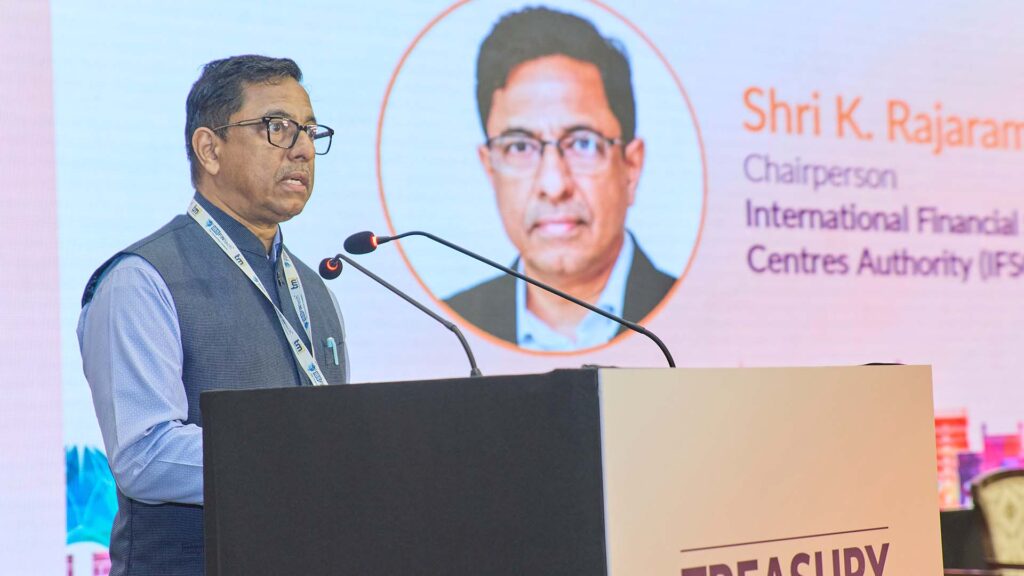
Rajaraman spoke of how GIFT City is creating a full ecosystem for banking, capital markets, insurance and fintech – one capable of operating to international expectations while still drawing on India’s energy and ingenuity. The idea is not to replicate Singapore or Dubai but to build a model that reflects India’s rhythm and reach: efficient, transparent and compliant by default.
He also reminded the audience that growth, in itself, is not India’s constraint – financing it responsibly is. The goal is to make global capital accessible without compromising the trust that underpins it, and to ensure that offshore-onshore flows move through channels that are both competitive and well governed.
For treasurers and CFOs, that vision translates into greater optionality – a wider set of funding, hedging, and investment levers – but also a heavier responsibility for how those levers are used. In Rajaraman’s words, India’s financial future will depend on its ability to “offer global standards without losing its own rhythm”, and that sentiment framed the discussions that followed.
The CFO’s report card for treasury
If the keynote was about national positioning, the next session brought it right back into the level of individual organisation – and into the daily relationship between CFO and treasurer. The knowledgeable panel set out to answer an apparently simple question: what does the CFO expect from treasury now, and how has that changed?
Ananya Suneja, Group CFO, Edelweiss Financial Services, described the shift in emphasis that many finance leaders will recognise: treasury’s “historical hallmark” was reliability – data, reporting, compliance, ALM discipline – and those fundamentals still matter because the organisation cannot afford basic errors. Yet the past few years have changed the centre of gravity. Liquidity shocks, global uncertainty, and a more jittery macro backdrop have pushed cash and risk decisions higher up the agenda, forcing treasury to adopt a more strategic posture while keeping the daily ‘hygiene’ intact.
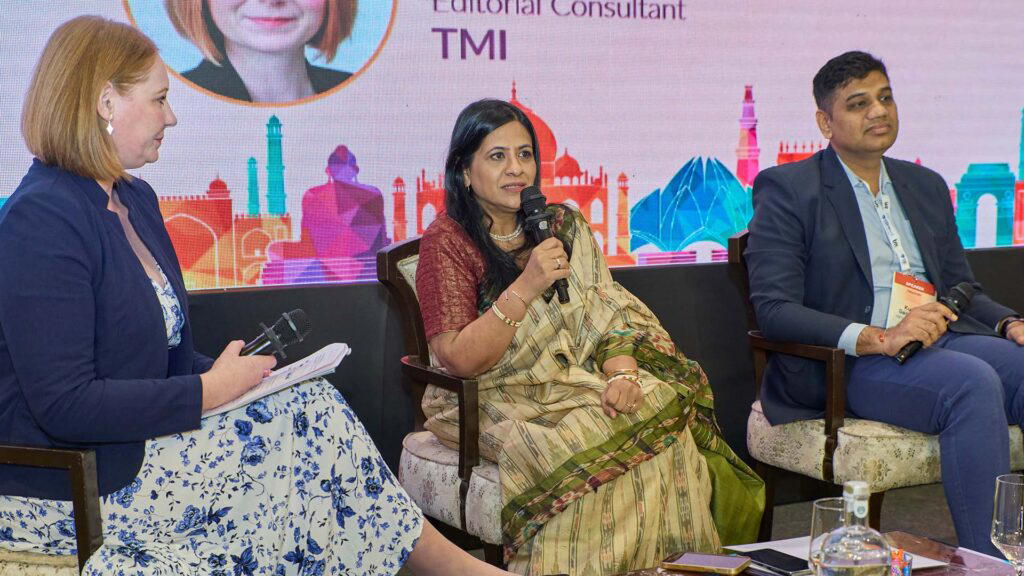
That balance between fundamentals and foresight was where her definition of treasury excellence landed. “The bedrock is still going to be exactness – but paired with a partner for a planning role that can deal with volatility, evaluate options, and build business cases in conditions that rarely feel clean or binary,” she explained.
Meanwhile, Kunal Sanghavi, Chief Strategy and Transformation Officer, HDFC Securities, picked up the thread from a different angle – showing how expectations expand when treasury is directly tied to business-model scale. He described the shift from a function preoccupied with documentation and limits to one expected to deliver insight, integrate efficiently across counterparties and vendors, and support product and balance-sheet decisions in real time. In his framing, technology reduces the labour, then raises the bar: the organisation starts to expect better and faster decisions.
The panel also delved into an area that comes up repeatedly in CFO-treasurer dynamics, yet rarely gets stated so plainly: treasury’s work is judged both on what it prevents and what it enables. Suneja posited a “treasury plus-plus” idea, looking beyond the traditional remit, exploring instruments and partnerships that may improve returns or reduce cost of funds, while remaining anchored in risk-return logic and governance. This could well be the model to watch for in 2026.
A modern hedging toolkit
Having given CFOs their say, the next panel tackled the daily treasury decisions that have to work regardless of what the strategy deck says. On stage, Sachin Chougule, Treasurer, Infosys; Niranjan Mohnot, Treasurer, Reliance Retail; and Sugandha Singhal, Head of Treasury, SRF, engaged in a robust debate moderated by Kumar Ayashkanta, Global Treasurer, EY GDS.
Having outlined what ‘good’ looks like, this panel largely focused on what ‘hard’ looks like too – particularly in risk management, where volatility can be constant yet uneven, and where every organisation has its own operational constraints.
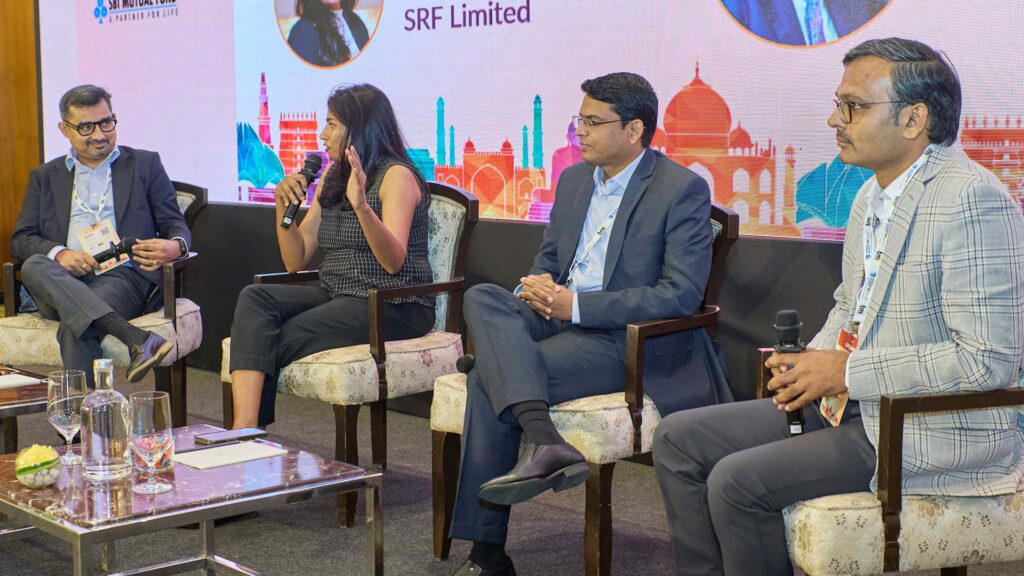
One of the clearest examples came from Infosys, where hedging strategy has evolved as market conditions have shifted. Chougule described how the company has moved away from relying predominantly on forwards and has made more active use of options, shaped by the nature of uncertainty and the need to protect outcomes without locking the business into overly rigid positions. The message was not about instrument preference but about adaptability – recognising when flexibility is worth paying for and when simplicity remains the most effective form of risk control.
That theme carried through the wider discussion. As hedging toolkits expand, the challenge for treasury is no longer access to products but governance – ensuring strategies remain consistent, explainable and aligned with board-level risk appetite. Hedging policy, as several panellists noted, is less about what instruments exist and more about what an organisation can execute repeatedly and defend under scrutiny.
Singhal brought a particularly grounded perspective from the manufacturing side, linking risk management directly to process, data and decision-making discipline. She spoke about the growing interest in AI within treasury, but framed it as an enabler rather than a shortcut. For her, AI has value where it improves forecasting, pattern recognition, and exception handling, but it does not remove the need for strong fundamentals. If data quality is weak or processes are unclear, automation simply accelerates the wrong outcomes.
She also made the point that AI adoption has to respect the realities of treasury teams. With lean resourcing and rising expectations, technology needs to reduce noise rather than create new layers of complexity. Used well, AI can support faster insights and highlight risks earlier; used poorly, it becomes another system that needs to be checked, validated and explained.
From a retail perspective, Mohnot echoed similar themes around scale and control. As transaction volumes grow and liquidity windows tighten, treasury systems must absorb complexity without compromising resilience. That often means investing in automation and analytics, but also accepting that some controls remain manual for good reason – because trust in outputs is built gradually, not assumed.
Across the panel, the tension between innovation and control was a constant. System upgrades and process redesigns can improve speed and transparency, yet they also bring to the surface uncomfortable questions about data ownership, internal accountability, and how far standardisation can go before it starts breaking local reality.
Capital allocation and the burden of integrity
After the morning networking and before lunch, a fireside chat brought a more personal view of the finance leader’s role when scale and complexity are unavoidable. IBSFINtech’s Promoter and CEO, CM Grover, was joined by Ajay Goel, President and Group CFO, Vedanta Group, for a discussion grounded in the realities of running finance at scale.
Goel described Vedanta as a business where volatility is structural rather than cyclical – spanning commodities, currencies, and geographies, with leverage and market swings as constant companions. In that environment, he returned to three anchors: capital allocation, navigating uncertainty, and risk governance through disciplined systems and processes.
Capital allocation, he argued, remains the CFO’s most powerful lever for value creation. With more opportunities than capital, the role is to decide which initiatives deserve funding – whether growth, deleveraging or selective acquisitions – and to ensure those decisions hold up when markets turn.
The conversation also touched on the personal dimension of the CFO role. Acting as a bridge between promoters, boards, and capital markets’ demands credibility as much as technical skill. Goel spoke plainly about integrity as a professional asset – something built over time and tested under pressure.
Grover reinforced the point by framing trust as an operating condition rather than a soft value. When trust exists, partnerships deepen and execution improves; when it does not, even well-designed strategies struggle to deliver.
AI in treasury: ambition meets governance
The afternoon – inevitably – returned to the hot topic of technology, with a focus on practical AI use cases and realities. The panel brought together Prateek Chaturvedi, Partner, EY; Kamala Vasantha Thiagarajan (KVT), Head – Treasury India and Cash Management Hub, Mercedes-Benz; and Parth Patel, Treasury Specialist, Bloomberg, and was followed by a live demo segment featuring Grover and Chaturvedi.
Two themes carried the discussion, with the first being where to start. AI is already influencing how treasuries think about forecasting, anomaly detection, and data interrogation, but panellists were clear that implementation cannot outrun governance. Auditability, cyber-security and explainability remain non-negotiable – particularly in a function where decisions affect liquidity, exposure, and counterparties. As one speaker put it, financial judgment cannot disappear into a black box simply because the output looks convincing.
The second theme was practical AI usage. Rather than asking what AI might eventually do, the discussion focused on what it can do safely now. After all, a well-framed treasury use case immediately sets boundaries around data access, control ownership, and human oversight. Without that framing, automation risks creating noise rather than insight.
KVT spoke about AI as an enabler rather than a replacement – useful in pattern recognition, forecasting support, and exception handling, but dependent on clean data and well-defined processes. Where fundamentals are weak, automation simply accelerates the wrong outcomes. That point was echoed in references to hallucinations and overconfidence in model outputs, reinforcing that experience and judgment remain essential layers in treasury decision-making.
Finally, the live demo helped anchor the discussion in reality. Seeing practical examples shone a light onto sharp questions such as where the data originates, how outputs are validated, who remains accountable, and how insights can be operationalised without adding risk. If there was a consensus, it was that AI’s value in treasury will be incremental, not revolutionary – earned through careful application rather than assumed through scale.
Viksit Bharat 2047
Later in the afternoon, the conversation widened again – from corporate treasury operations to India’s broader digital trajectory under Viksit Bharat 2047 (India’s vision to become a fully developed nation by its 100th year of independence, focusing on inclusive economic growth, social progress, environmental sustainability, and good governance). In this session, Shailesh Haribhakti, Chairman, IBSFINtech & Stair Digital; Lalit Khilani, Vice President – Finance Transformation and Digital Office, Maruti Suzuki India; and Sachit Sahni, Head of Transaction Banking India, Standard Chartered Bank, explored what a “digital and trusted financial future” really implies for the way money and data move.
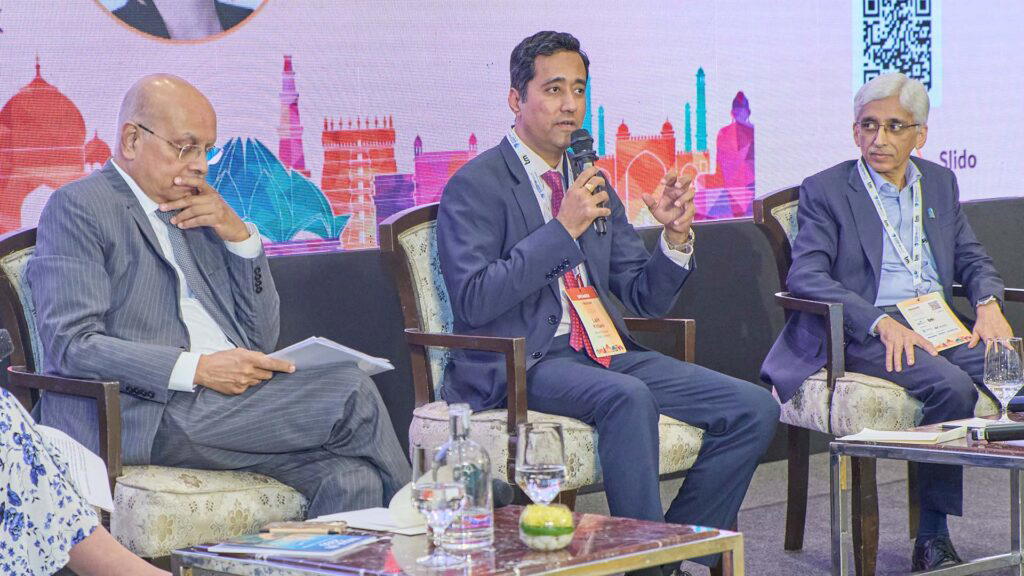
The framing was unapologetically ambitious: India’s digital rails – UPI, Aadhaar, ONDC – have already changed the mechanics of everyday finance, and the next phase is about making those rails intelligent enough to support an AI-enabled economy while remaining “trusted by default”.
For treasurers, the relevance lies in what happens when infrastructure reduces friction. If liquidity becomes more immediate, if transactions carry richer data, if transparency is baked in, then parts of treasury’s operating model start to shift. Some processes become faster. Some controls become more automated. Yet the governance challenge does not disappear – it moves. The questions become: what do we trust, why do we trust it, and what proof do we have when something goes wrong?
The panel also touched on the expanding vocabulary of modern money – CBDCs and stablecoins, tokenisation of deposits and MMFs, and the shape of responsible innovation when value can move in new forms. In that context, trust is less a branding concept and more an engineering requirement – a property of systems, rules and incentives that has to be designed, tested and monitored.
Markets still run on confidence
The final session of the day deliberately pulled the lens away from systems and operating models and back towards markets themselves. Titled Why the Next Bull Run Will Be Built, Not Bought, it brought a sharper edge to the close, with N. Jayakumar (Jakes), Managing Director and Group CEO, Prime Securities, joined by Amit Gupta, President and National Head - Wholesale Business, SBI AMC, and Kumar Ayashkanta, Global Treasurer, EY GDS.
Gupta framed the discussion around a challenge familiar to treasurers – how to generate returns in an environment shaped by geopolitical uncertainty, currency shifts, and uneven growth, without stretching risk appetites too far. As treasury functions move closer to profit contribution, he noted, the discipline around risk-reward matters more than ever.
Jakes, meanwhile, approached the question from a market perspective, focusing less on forecasts and more on how confidence behaves under pressure. He spoke about a growing “trust deficiency” in global markets, particularly around the US dollar’s safe-haven status, with capital moving across currencies and asset classes as investors reassess assumptions. Yet his message was not one of rupture. Confidence, he argued, is tested repeatedly but rarely abandoned outright, with markets more prone to overshoot and revert than to break cleanly.
Elsewhere, Ayashkanta brought the conversation back to treasury execution, highlighting cyber risk and the expanding exposure created by data and AI-led tools. He also reinforced the distinction between hedging and trading, cautioning that derivatives remain risk-management instruments rather than reliable sources of return.
Taken together, the session offered a measured close. Markets may be volatile and narratives unsettled, but for treasurers the task remains familiar: balance risk and return, protect liquidity, and stay grounded when signals conflict. It was a fitting end to a day focused on building financial frameworks that are not only more advanced but resilient enough to perform across cycles.
Building a confident future
Presented by Treasury Management International (TMI) and IBSFINtech, a globally recognised TreasuryTech platform for corporations, Khazana 2025 brought sharp focus to the evolving role of trust at the heart of modern treasury.
Beyond technology, markets or new financial structures, the most consistent theme of the conference was trust. Whether the discussion centred on GIFT City, capital allocation, AI adoption or market behaviour, progress depends on confidence – in data, governance, institutions and in the judgment of finance leaders themselves. Optionality is expanding and tools are becoming more powerful, but the licence to use them still rests on credibility and discipline.
Khazana 2025 therefore served as a reminder that treasury’s growing influence comes with higher expectations. In a faster, more complex financial environment, trust remains the currency that underpins resilience, decision-making, and long-term value creation.