
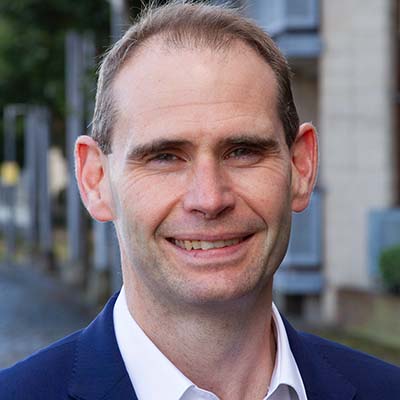
- Jason Murphy
- Co-Founder, Centrus; President, Irish Association of Corporate Treasurers (IACT)
- Tom Alford
- Deputy Editor, Treasury Management International
Jason Murphy is Co-Founder and Executive Director of Corporate Finance Advisory Group, Centrus. He is also currently the President of the IACT. A Fellow of the Association of Chartered Certified Accountants (ACCA) and a past Chair of ACCA Ireland, with more than 25 years’ investment banking and financial advisory experience. Murphy also lectures on Treasury Management and Derivatives for the Masters in Finance and Masters in Financial Risk Management at Trinity College, Dublin.
The formative years in education and work tend to shape and direct the later years, one way or another. The starting point for a long and fruitful career in finance and treasury for Murphy was as a high school student in Ireland just prior to undertaking his degree studies.
Having volunteered at his local credit union in Waterford, Murphy gained early exposure to the importance of finance as a community service. The credit union’s member-owned, not-for-profit model offered him a grounding in how financial institutions can operate with purpose and local accountability. “Credit unions have a very strong community ethos, and that really resonated with me,” he reflects. “You see, first-hand, the positive impact that accessible and trustworthy financial support can have in people’s lives. It was a great place to learn because you genuinely feel you’re contributing to the community you’re part of.”
Having started volunteering while still at school, Murphy was later offered a part-time job at weekends while at university, where has was studying for a business degree, specialising in economics and finance. Although initially uncertain as to where this might lead, his work with the credit union had already helped to shape his views. “The more time I spent there, the more I realised that I was interested in a career in banking,” he recalls.
In fact, Murphy’s credit union experience had also started to sow the seeds of interest in treasury. “One of the major considerations in the credit union was how we managed member deposits. We placed surplus funds with a clearing bank, and there was a detailed process around moving and controlling that cash. On the lending side, we had to set the right interest rates and ensure we always maintained enough liquidity so members could withdraw their funds. So even early in my career, I was dealing with treasury issues like cash management, credit risk and member confidence.”
Even on the payments side, where cheques and cash still ruled, Murphy was alert to what was to come, with a programme underway in the credit union to digitally scan signatures with a handheld device. The processes and thinking behind this upgrade, he notes, offered him “some insight into the importance of developing and aligning treasury processes with well-balanced policy”. It is something he advises and lectures on to this day.
Banking on education
With the world of banking calling post-degree, Murphy secured himself a position on the Bank of Ireland graduate programme. He was placed into International consultancy and corporate banking and post the programme secured a role in the international project finance team. This saw him take on extra-curricular ACCA exam study, setting him on a path towards becoming the professionally qualified accountant he is today. Murphy is a proud Fellow of the Association of Chartered Certified Accountants where he served as Chairman of ACCA Ireland from November 2021 to March 2023.
Most of Murphy’s career focused on investment banking in the infrastructure sector, with a move towards more advisory work as his experience accumulated. This has seen him tackle and learn from many treasury-related challenges.
Indeed, one of the core lessons from the 2008 financial crisis was the structural mismatch between funding and assets. Many institutions were financing long-term loans with short-term funding. When liquidity evaporated, that imbalance became exposed, creating a funding gap that, for some institutions, proved impossible to bridge. A core part of banking is maturity transformation – funding longer-term lending with shorter-term deposits, comments Murphy.
That maturity mismatch is a traditional source of profitability, but it also introduces liquidity and interest rate risk. The financial crisis showed what happens when that mismatch is combined with weak underwriting and insufficient capital. Post-crisis regulation has therefore focused heavily on liquidity buffers, stable funding and stress testing. The result is a more resilient system, but also one where treasury and balance sheet management are much more complex.
Having spent most of his early career on the asset-origination side, Murphy worked primarily with borrowers until around 2010, when he joined Dexia, the Franco-Belgian financial institution. There, he broadened his focus into balance sheet management, contributing to work on public-sector and infrastructure lending portfolios.
These portfolios typically comprised long-dated assets, often extending 20 years or more. Optimising them in the post-crisis regulatory environment required a strong understanding of funding structures, liquidity planning, and overall asset–liability alignment. “We focused on ensuring that the long-dated asset portfolio was supported by appropriate term funding and a robust liquidity position. It was, in many ways, a practical introduction to asset–liability management and the broader discipline of treasury — matching the funding profile to the needs of the balance sheet and strengthening overall resilience.”
Filling the buckets
Treasury is categorised by Murphy according to three “buckets”. The first is the core area of cash and liquidity management. The second is financial and operational risk management –hedging interest rates, FX, inflation, and commodities, and managing complex derivatives, for example. The third bucket covers capital structure financing, with activities such as raising debt or equity capital, capital structure strategy, investor relations, and managing credit ratings. Most of his career, he notes, has been spent either in the second or third bucket.
With many aspects of the treasury profession covering a broad spectrum of financial activity, Murphy has accumulated a deep well of treasury experience without ever having taken on the role of, for example, group treasurer. “I left banking in 2008 to set up a debt advisory team in Deloitte, helping clients on treasury challenges such as raising debt capital and debt restructuring,” he details. “Then in 2014 I set up a corporate finance advisory business with some partners, advising clients on areas such as financial market risk and capital structure strategy - the skills I learnt working in investment banking being brought to bear in my role as advisor.”
In working with group treasurers and finance leaders internationally, Murphy advises across the full spectrum of treasury, with particular depth in funding, capital structure and risk management. Cash and liquidity management also forms part of his work – a core discipline that underpins every treasury function. He is a strong advocate for continual learning and development in all these areas, noting that even the fundamentals evolve as markets, technology and organisational priorities change.
Practical lessons
“My biggest passion for some time has been education in treasury – and this is one of the reasons I became involved in the IACT,” says Murphy. “Over the years, particularly in the banking sector, when things have gone wrong, part of the problem has been a lack of education in the key aspects of treasury,” he comments.
“It’s very common for bankers to spend their entire careers focused on lending, without ever really engaging with the liability side of the balance sheet. But understanding where the money actually comes from – the funding sources, the liquidity considerations, the daily treasury pressures – is fundamental. When you’ve seen both sides, you approach every lending decision with a much deeper appreciation of the risks, constraints and value drivers involved. It makes you a better banker, not just a better treasurer.”
But Murphy believes the treasury profession itself could benefit from a more structured entry process. While treasury is undoubtedly a key component of a corporate and banking finance function, it’s also true that many of its exponents are finance professionals who have ‘fallen into it’.
As an advisor of many years’ standing, Murphy has seen this to be the case – and many other TMI My Life in Treasury profiles confirm this ‘accidental’ approach. While clearly the profession is characterised by its high level of expertise, he argues the case for establishing a foundational education in what the role is, its objectives, and the skills required to robustly and continuously face the challenges thrown at it.
To this end, Murphy has recently added the role of lecturer to his CV. In addition to his advisory work, he can now be found designing courses across a range of master’s programmes. But the difference is, he takes a more practical approach to his subject. As part of his move into academia, he has been working with one institution on the creation of a professional diploma in treasury. “It will be a very practical, as opposed to academic, qualification,” he reveals. “We want students to learn about the day-to-day role of treasury, and immerse themselves deeply into the key skill sets.”
That there is little in the way of recent academic coverage of treasury comes as a disappointment to Murphy, certainly given the importance of the role. “When I started lecturing, most of the books available were at least 10 or 15 years old. There are some revised editions of older texts, but no new academic material is being written. And nothing covers the huge amount of development and progress we’ve seen in the past few years.”
Raising up the profession
For his master’s students in particular, Murphy notes that academic research in treasury remains relatively limited. While there are strong professional education pathways in place and some excellent programmes delivered by specialist bodies, he believes that opportunities to study treasury in depth are still too few – especially given how central treasury has become to financial stability and strategic corporate decision-making.
“I think part of the issue is that treasury is not yet seen as its own profession. Accountancy is a clearly defined profession with its own qualifications, training programmes, and established structures around it. Treasury hasn’t fully hit that spot yet. But it’s an area that I’m really interested in helping grow. And that it’s where my real interest lies in the future, around treasury.”
Of course, the various treasury associations around the world are playing an important part in advancing the role. For his own part, Murphy has witnessed first hand how treasurers are often reliant on their peers for treasury development, and he joined the IACT as he believed it was a means of coalescing treasury thinking. Having decided to contribute towards its leadership and direction, he joined the committee “to help promote the whole education side”.
Since joining the IACT, connections with universities have been established. “We’ve set up the graduate programme with Trinity College Dublin, where this year, two graduates from the master’s programme will spend nine months in two corporate treasuries in Ireland,” he reveals.
As part of an 18-month course, secondment to a corporate treasury offers these students vital treasury experience. The opportunity was introduced on the back of comments from students who were finding that they needed real-world treasury experience to secure their first job in treasury. Now in its second year, he is happy to confirm that “it’s working really well”.
IACT itself has taken measures too. It has formed, as part of its conference programme, a treasury academy. Now in its third year, this has expanded to cover two levels of attainment, says Murphy.
The first level offers a comprehensive introduction to core treasury functions in a global context. Participants gain a clear understanding of international clearing and payments systems, the fundamentals of FX, and key cash management techniques, including the strategic use of pooling. The second level is tailored for individuals who completed level one and is a deeper dive into the intersection of Treasury, Tax, and Legal frameworks, with practical insights into optimising financial strategies.
Treasury for all
While initially there may have been concerns the academy might run out of applicants after a few years, it seems to have gone from strength to strength, with no shortage of applicants. “The education side of my role within the IACT has become a major commitment. We have also recently announced the launch of a Professional Diploma in Corporate Treasury in partnership with the Institute of Bankers in Ireland and accredited by University College Dublin. The programme’s first students are expected early in 2026. This is a significant step forward for treasury education in Ireland and I am delighted to be announcing this in my year as President.”
Among students, Murphy is committed to ensuring treasury is open to all, including those facing socioeconomic disadvantage. “Treasury is an attainable profession,” he states. “I’ve been looking at different pathways to see how to assist in that regard.”
Having earlier in his career taken the ACCA schools programme into designated disadvantaged schools in Ireland (known as DEIS or Delivering Equality of Opportunity in Schools), he understands the value of trying to tackle various barriers to entry. He believes opportunity should be based on talent and not connections.
“It’s really important to have a diverse and broadly representative treasury profession,” explains Murphy. “There’s still a lot of work to do in this area, beyond this year, but I’m driven by my views on education and social impact.” That drive, he adds, is rewarded when a student not only becomes aware of treasury as a career but also sees it as something they may wish to pursue. As he later comments: “It’s all about breaking down barriers.”
Balancing act
With the graduate programme, the academy, the professional diploma and the social impact projects underway, Murphy somehow found time this year to participate in an initiative in Ireland called Higher Options. This centres around a large annual education expo for secondary school students, organised by The Irish Times.
The aim, he explains, is to bring together hundreds of exhibitors (universities, colleges, further education, training providers, international institutions) in one location so that students from across Ireland can engage directly with representatives. “This year, I gave a talk, promoting interest in treasury among the broader student universe,” he says.
There is a powerful longer-term driver for this level of focus. “One of the major challenges for the treasury profession is the talent shortage,” warns Murphy. More graduate programmes means the pressure on finding junior treasurers, with just a year or two of experience, should be easing. “But now we’re hearing from IACT members just how difficult it is to find treasurers in the next bracket, with three- to six-years’ experience.”
That difficulty is compounded by the increasing pace of treasury’s move towards technology. “If you want someone with three or four years’ treasury experience who also has a full understanding of AI, they’re just not out there. Retraining takes a lot of time but they are needed now,” he notes.
The talent shortage seems to be an issue in many regions. Ireland has a strong international treasury community for the size of the country. But Murphy understands the need to keep building on that treasury expertise, “because a deep talent pool is another compelling reason for companies to locate their treasury operations here”.
To maintain forward momentum within its treasury community, IACT supports a busy schedule of conferences, seminars, webinars, and social events. “These are all about helping our members to be able to network with each other and share ideas,” Murphy observes. But he also recognises the need for the association to balance the needs of all members.
While in the past few years the energy has been directed towards developing its appeal to younger treasurers, and those thinking about joining the profession, more recently an IACT initiative has been launched that is designed to appeal specifically to those with a deep well of treasury experience.
This has established a series of meetings, roundtable events, and guest lectures aimed at generating more interaction among these senior practitioners. In particular, matters related to strategy have been targeted. And for good reason.
There is a body of evidence suggesting that many treasurers have ambitions of joining the C-suite, notes Murphy. “We’ve yet to see Chief Treasury Officer used in any material way, but it’s where some in the profession want to be. We know treasurers are strategic partners: that debate’s over. But where exactly we fit within the executive team, I think that discussion is still to be had.”
The right way forward
In 2026, Murphy will sit on the IACT committee as immediate past president. He says he wants to focus on the successful launch of the professional diploma in treasury, while also driving interest and momentum within the graduate programme.
Within the scope of this work, Murphy is fully intent on following through on some of the social mobility initiatives started this year. He will also be seeking to develop connections with more universities in Ireland, and maybe internationally.
Another challenge he is looking to address over the coming months and years is the urgent need for contemporary academic and practical texts to aid treasury students in their studies. This is a major undertaking. But as one who is convinced that “the education of treasury is the right way forward”, this may signal the emergence of a new role for Murphy as a Chief Education Officer within the treasury profession.