
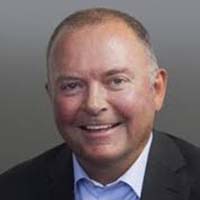
- John Gilsenan
- Non-Executive Director, Steris Irish Finco
- Tom Alford
- Deputy Editor, Treasury Management International
My Life in Treasury
In September 2025, John Gilsenan retired from his full-time role as Head of Compliance at investment firm Quilter Cheviot Europe, having forged a great depth of experience in the international financial services industry over his long career. A qualified Chartered Certified Accountant, Chartered Tax Accountant, and Licentiate of the Compliance Officers of Ireland, he spoke with TMI about what shaped his approach to an industry that has captivated him for decades.
When he retired from his full-time role, one fact was certain for Gilsenan: he would not be completely turning his back on a long and fruitful career in finance. And, for the benefit of the treasury community, it’s as well that he remains connected, as his is a body of work that has commanded much respect among his peers.
Indeed, it’s one that has seen him help establish and then take up presidency of the Irish Association of Corporate Treasurers (IACT) and later become its representative in the European Association of Corporate Treasurers (EACT). In doing so, Gilsenan has helped many others to shape their careers in treasury. In fact, throughout his own life’s work, he has striven to ensure the profession grows in stature among its peers present and future but especially for those for whom treasury is often seen as an enigmatic service.
In retirement, Gilsenan remains a non-executive director within the Irish subsidiary of Steris, a US patient care products and services business. The Dublin-based entity runs its treasury operations out of London, covering core aspects such as cash management and intercompany loans. This, he says, will be one way of maintaining his active interest in all things financial and treasury. But he is also a life member of the IACT, and continues to be its representative in the EACT. These are both roles that will afford him continuing access to a world which has been part of his professional life for many years.
In the driving seat
Gilsenan’s early career started in tax and accounting. He then moved into investment management, banking, finance and then advisory work, before alighting on his most recent endeavours in financial compliance. However, the main body of his work was with Porsche International Financing, based in Dublin’s International Financial Services Centre (IFSC).
The car manufacturer, keen to leverage the benefits of IFSC’s designation as a ‘special economic zone’ (SEZ) with its 10% corporate tax rate for financial services activities, had seen an opportunity to establish its treasury centre there in 1991.
Gilsenan was welcomed aboard soon after. The instant appeal, he admits, was the iconic brand itself. But he was also keen to develop his financial career, taking up the position of chief accountant with the newly established entity. “It was my first exposure to treasury,” he recalls. “What was great was that it was a global treasury operation, dealing far beyond the usual EMEA scope of Dublin treasury centres at that time. We were working in every Porsche market, including all G20 countries.”
Porsche International Financing was a group-level operation; rather than handling dealership or consumer finance, it provided core treasury services into Porsche entities across the firm’s entire market base, other than Germany which, as HQ, had its own treasury function.
In servicing some sizeable operations with local currency support, Gilsenan’s work in Dublin was naturally heavily led by FX and cash management considerations. He headed the firm’s global cash management programme, which brought all Porsche subsidiaries into an interest-optimisation cash pool.
The arrangement, which he describes as “relatively simple”, saw the firm’s Deutsche Bank platform facilitating daily cash sweeps, with netting to ensure excess monies in one subsidiary could fund a deficit in another. “We also set up FX forwards to help us plan and mitigate any risks there, and we co-ordinated longer-term loans and some reinsurance for those subsidiaries too.”
Picking up the tailwind
Within three years, Gilsenan had risen from Chief Accountant of Porsche International Financing to become the Dublin entity’s Managing Director. The opportunity arose when the incumbent MD returned to his native Germany. “I applied for it. Didn’t really think I’d get it, but either my abilities were undeniable or they couldn’t find another German to come over and run the place,” he jokes.
On his watch, a reinsurance subsidiary (Porsche International Reinsurance) was set up, mainly to cover warranties issued on used vehicles across EMEA. But the car manufacturer was already moving ahead at pace, and Gilsenan’s still relatively small Porsche International Financing unit picked up the tailwind.
“We’d gradually built it up. It was an organic build,” he explains. “But Porsche was selling more and more cars each year. It had developed a modern range that in 2002 included its first sports utility vehicles [the Cayenne]. This opened up new leisure markets for us, rapidly increasing turnover. That led to probably our biggest achievement in Dublin: the issuance of three major corporate bonds.”
The bonds, underwritten by parent company Porsche AG in Stuttgart, and totalling €3bn, were issued in 2006 on the international capital markets via listing on the Irish Stock Exchange. These were noted as the largest unrated corporate bond issue at the time, according to Finance Dublin.
As an intriguing side note to this issuance, Gilsenan reports that the physical five-year bond certificates were printed with an embossed picture of a classic Porsche 911 sports car. “It was not your standard bond certificate; it was the sort of thing that you’d frame. But if investors wanted to claim their interest, they had to tear off and submit a part of this picture. Our thinking was that the picture was so good, maybe people would have it framed and not ask for their interest. Most investors however did claim it.”
Living in interesting times
Gilsenan’s treasury work while with Porsche had seen him increasingly involved with the IACT. He’d joined not long after embarking on this aspect of his career and was on the committee in the early 2000s when the association had reached a crossroads. With membership numbers somewhat low relative to running costs, the decision was taken by those pioneering members to push on but with reduced overheads. By 2007, with membership numbers strengthening once more, he had become president: “a major career achievement”.
The association has grown immeasurably since then, and in 2019, Gilsenan, alongside a small group of other long-haul members, was granted life membership. At that time, he was also appointed as the IACT’s representative on the EACT, a position he holds to this day.
Of course, having taken on the role of IACT President in 2007, Gilsenan was just in time to see the economic world tear itself apart. “Those were interesting times,” he remarks. “The countries most affected by the financial crisis, especially smaller countries such as Ireland and Greece, were the ones that more or less became the public face of that debacle – even though obviously the crash affected the US and almost every other country.”
With Ireland facing the unwelcome glare of economic scrutiny, and the financial crisis having upset Porsche sales worldwide, his role was as much about maintaining the day-to-day running of Porsche International Finance as it was reassuring the firm’s shareholders that the country “remained a good bet on the management of their subsidiary”.
A few years on, and following the takeover of Porsche AG by VW Group in 2012, the consolidation and reorganisation of Porsche in Ireland saw Gilsenan taking the difficult decision to move on, at least by stages.
Starting in 2013, he took on a year-long consultancy role at Porsche AG Group, still based in the IFSC. “Over the years, the Porsche entity in Ireland – especially the reinsurance company – had become increasingly regulated. That meant our focus was more on compliance than on growth, so when I left, I wanted to use that regulatory compliance and risk management experience.”
This he duly did, offering his services to an “eclectic mix” of companies. This led to a permanent appointment within the Dublin office of a German asset manager, W&W, and then eventually to his final full-time role as Head of Compliance, Quilter Cheviot Europe.
As a “cousin” of treasury, compliance enabled him to remain firmly in an international financial services setting. “I enjoyed the discipline and responsibility of it. Where I was Head of Compliance, I had an independent role in the firm, because I had to reflect both the requirements of the regulator and those of the firm’s activities.” Reporting directly into the board and ensuring the business was being run on the correct regulatory lines, he adds that it sometimes felt as if he was “sharing the office with the regulator”.
More than numbers…
What has held Gilsenan’s attention in the finance sector over the years has for the most part been his love of numbers. “I was always very interested; that’s why I studied accounting and tax,” he comments (his Bachelor of Commerce degree in 1983 was complemented by Chartered Tax Adviser status via the Irish Taxation Institute in 1987, and Association of Certified Chartered Accountants qualification in 1989). However, he “equally enjoys report writing and the written word”, and continues to be fascinated by the machinations of big business.
This triple attraction has been well met by his employment choices, especially at Porsche. While he has already admitted being lured in by the brand, he asserts that the business model that enabled the firm to pioneer remote treasury operations in Dublin was of equal starring. And with an intense growth phase underway as he arrived, the responsibility that the parent company handed to his small team was indeed compelling for many years. As he states: “It all very much piqued my interest.”
Power to the people
There are certain competences that, once developed, usefully follow an individual across their whole career. For Gilsenan, being “a people person” has been a necessary transferable skill for his work in the financial arena.
“Even if you’re working in a small team, and you’re in front of a computer half the day, you’re often still dealing with other people. And whether they’re your staff, or from your parent company, the banks or the regulators, I would say well-developed interpersonal skills will always stand you in good stead.”
Leading a typically small treasury team, where everyone needs to know what they have to do, requires both trust and natural empathy, he continues. “You’ll have a much better chance of getting the job done well in a harmonious working environment. If you don’t have people skills, you need to work on them because modern business, at the end of the day, is all about collaboration.”
Reflecting on his Porsche days, Gilsenan remarks that where cash management involved centralisation, it was vital to persuade all entities – some quite sizeable - to work with treasury. “We had to build centralised cash management business by business, bank by bank, account by account, currency by currency. Well-developed persuasive and interpersonal skills, particularly when you are working with disparate functions, are vital to achieve that.”
Technology … but not at any cost
While Gilsenan believes interpersonal skills should always have a role to play in treasury and finance, he feels that the application of technology has to an extent detracted from the “fun and excitement of constant interaction”.
The day-to-day work of treasury is undoubtedly now more machine-based. Automation can, for example, achieve the best trade price immediately, deliver instant online confirmations, and remove much of the paper-work, all without having to talk to anyone. With online trading platforms taking over in some treasuries, the idea that deals can be made over the phone has almost slipped into history, he muses.
But while many may see this as a positive development, he admits to missing the “noise and buzz” of the office. “Everyone’s at their screens, and a lot of people have their headphones on. Often there’s just no communication.” As a firm advocate for direct communication, one mantra he has long maintained is ‘lift the phone’. “It’s about not sending an email that could all too easily be misconstrued if you have an issue, but instead, calling and having a chat.”
That said, Gilsenan acknowledges that the emergence of technology “has for the most part been transformative”. The possibility of working remotely and staying in touch with people while on the move is made so much easier, for instance. While he feels the social downsides still need addressing, he senses a post-Covid pendulum swing back towards relationship-building in business.
“The days of knowing all the dealers in a certain bank, and them inviting you to play golf or go to the pub, looked like they were long gone, but they are gradually coming back,” he enthuses. “The real extravagances of old have gone. But corporate entertaining is coming back on the agenda. After all, we’re human beings as well as workers, and I believe that we should be allowed to have fun at work. As long there’s disclosure and transparency, we should all recognise the value of doing so.”
The treasury nexus
The value of professional bodies such as the IACT and the EACT has “grown substantially in recent years”, states Gilsenan. Of course, from treasury association membership can emerge great friendships over the years – the four past IACT presidents can often be found together on walking tours – but its worth in current volatile circumstances is a strong as ever, he says.
But that quality is nothing new for Gilsenan. “In the course of a long career, I’ve heard the expression ‘we live in uncertain times’ many times over. But really, when didn’t we? There’s always been something going on somewhere. So I don’t personally judge the current world to be any more or any less uncertain. But I do believe that in the midst of all uncertainty, treasury is there to reduce its effects, managing corporate monies or debts in a prudent way.”
The responsibility of treasury may therefore be unending, and presenting its appeal to new entrants remains a constant quest for the various treasury associations around the world. In explaining how the curious might be drawn to a career in treasury, Gilsenan says he offers simple, timeless facts.
“Treasury really does offer a very good insight into the whole business. You can be directly responsible for inflows and outflows on a day-to-day basis, and yet also become involved in the strategic direction of the firm in terms of its longer- or medium-term financing. In fact, I feel that it’s a privilege to be involved in the only function that sits at the exciting interface between financial control, and sales and marketing.”
Having derived much pleasure from treasury and finance, Gilsenan is now looking towards a new chapter in his career. However, while he is eagerly anticipating “relaxing a little bit more, with fewer deadlines” – a process that will see him getting to grips with his garden, and travelling more – he reveals that he has every intention of continuing in his non-executive roles and treasury association involvement. This at least will ensure that the world of treasury benefits from his knowledge and experience for a while yet.