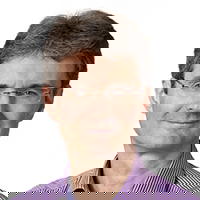
- Matt Grundy
- Head of UK Treasury, Capital One (Europe)
- Tom Alford
- Deputy Editor, Treasury Management International
Are You Sitting (Too) Comfortably?
Matt Grundy, Head of UK Treasury, Capital One (Europe), talks to TMI about the pressures, prospects, and possibilities he encounters within the UK subsidiary of this US financial giant.
The treasury function of the UK subsidiary of US banking major, Capital One – Capital One (Europe) – has an enjoyably diverse and often challenging set of responsibilities. It’s a remit that sees Matt Grundy’s team engage with the shifting needs of the business on a day-to-day basis.
But it is this remarkably broad spectrum of activities to which Grundy ascribes his enduring enthusiasm for treasury and finance, racking up more than three decades of employment in this space, occasionally taking steps into the unknown to see what happens.
The current set of duties on Grundy’s roster includes the management of liquidity for the UK business. This demands quarterly stress testing, and daily cash management responsibilities that includes bank relationship management, and forecasting all critical daily UK business payments.
However, he is also charged with calculating capital requirements, monitoring FX and other financial risks, and, as Head of UK Treasury, he is a key constituent of the UK Asset-Liability Committee (ALCO). This requires him to attend regular meetings to assist in overseeing the balance sheet, managing liquidity and market risk, aligning funding strategies with the parent, and maintaining a comprehensive business continuity plan (BCP).
Although Grundy’s UK treasury reports up to a much larger treasury and capital markets department at the US parent’s Virginia headquarters, he says it is still very much part of the UK finance department. Indeed, he sits on the UK finance leadership team, working closely with the UK-based CFO, and meeting daily with his local finance leadership counterparts from accounting, FP&A, and tax.
Adapt and thrive
While the smooth running of Capital One UK’s treasury is assured by the high level of knowledge and experience underpinning it, Grundy is always pushing for improvements. One of his main interests in this respect is how technology can help. “We implemented a TMS in my early days, but there’s an endless list of incremental improvements that we’ve been making, and it’s fascinating to think about what we’ll look like five years from now,” he enthuses.
The TMS now live in the UK was one of the first major projects Grundy undertook as treasurer. It had already been rolled out within the US operation, but the UK instance was more or less implemented from scratch, he says. As a relative newcomer, he found he was asking questions about processes that seemed to challenge the established order. But through his fresh approach, treasury was able to reinvigorate and even reinvent certain activities. It was made clear to the whole team that, through the implementation, the more that could be streamlined and automated, the better. This has certainly been the case in terms of removing or reducing risks, but also in freeing up time “to be more forward-looking”.
What has been automated today may still need a degree of human oversight, but Grundy believes at some point in the future treasury functions could be relieved of many such tasks. This strays into the territory of AI, a technology to which he says he has recently been giving “much thought”.
“It’s increasingly the hot topic,” Grundy acknowledges. “But for us to adopt it, I think we need to have a clear issue to solve, as opposed to starting with an AI solution then go looking for problems.” However, he “keeps his eyes and ears open” to any potential AI application – and is especially alert to as yet unrealised possibilities. “I’m 100% up for embracing new technology and its potential. I welcome anything that helps us do what we do in a smarter way.”
Of course, AI adoption comes with responsibilities around data and security management. Grundy is acutely aware of this. “With everything that we do in treasury, clearly we have to be careful. We’d be taking no risks whatsoever with AI, or any other technology,” he states. And while he also knows that technology, specifically where it enables process automation, can help to mitigate risks , he is adamant that “anything remotely cash or payments-related will be tested to within an inch of its life”.
Improvement is not all about deploying modern systems. As part of the constant strive to progress, Grundy and his colleagues across finance recognise that “it’s the little steps that we should not forget”. Even standardising how regular emails are structured and automating how they are sent he says counts towards “big time-savings”.
Naturally, where changes are made to long-established processes, it can often generate resistance. The phrase “we’ve always done it that way” will be familiar to many in this context. While imposing change is not always good or even necessary, it is always worth exploring options. “We’ve got a good, forward-looking team here,” confirms Grundy. “We have a mix of skill sets, but we’ve all got the right mindset in terms of being open to change and building awareness of what’s possible.”
This receptive attitude is mirrored across the finance function, and when new ideas are shared, there will be an honest discussion about allocating resources and discovering how any implementation will impact priorities with other initiatives. The fact that each function is ready to talk and listen is always healthy.
Communication at a personal level for Grundy requires him to “wear a number of different hats during the day”. In moving between meetings, he may be called upon to tackle personnel matters, potential new business initiatives, or the technicalities of the liquidity portfolio mix. With participants drawn from a range of finance or business functions, the technical tone has to be moderated accordingly. “This juggling act – pitching in different ways to different audiences – is one of the aspects that keeps the role really interesting for me,” he reveals.
And while actual technical issues, whether internal or external, can be disruptive, Grundy adheres to the Churchillian adage of never letting “a good crisis go to waste”. Not that his team are often faced with such challenges, but when they do arise, he believes that in addressing them with an open mind, they can present otherwise unseen opportunities to progress. “We have a great track record of improving how we work and tightening controls, even after encountering the smallest of issues,” he declares. “I’m proud of how the team proactively and positively responds to every issue.”
Strong foundations
The knowledge and skills required of Grundy to build upon a successful treasury model were developed during his early career moves in finance and accountancy. Having started his working life in a high street bank, he moved to Capital One (Europe) as a credit analyst in 1998, just as it was beginning to make an impact in this market.
Within a year or so he was taking on other specialist finance roles within the organisation and moving up the ranks. He qualified with the Chartered Institute of Management Accountants (CIMA) around 20 years ago and had looked set for a long career in management accountancy. However, keen to explore options “without straying too far from finance”, in 2013 he landed the role of Supplier Manager, looking after one of the bank’s offshore call centres. “It was a great experience that took me to the Philippines five times in a couple of years, which I really enjoyed.”
Then it all changed in 2015 when he stepped into the Capital One UK Treasury Manager role. “I received a call asking if I’d be interested in taking on treasury, and mainly because I’d planned to return to the Finance department one day and it was one area I hadn’t touched previously, I gave it serious thought. The more I thought about it though, the more I liked the sound of treasury and the more it made sense, and then quickly after taking on the role I realised that this was my vocation.”
With treasury working closely alongside finance and also touching many other parts of the business, Grundy’s interest and enthusiasm to this day remain undiminished. But he knows treasurers have a significant part to play, with many activities undertaken in the wider organisation feeding through to the department. This means advising the CFO and the Finance department appropriately as each steers its way through external events.
For this reason, Grundy stresses the importance of the treasurer gaining a deep understanding of their own organisation. “We have to know what drives and influences our cash flows, how growth impacts our funding needs, and what the role of seasonality is,” he explains. “I’ve been with Capital One so long, with so many lived experiences, but if ever I went elsewhere, understanding those business elements would be a top priority.”
While occasionally the pressure on treasury to perform well can intensify, especially in serious adversity (the pandemic, for example, saw customer card spend plummet, testing Grundy’s understanding of cash flows), he “thrives on the criticality of what we do” and often “feels energised when we’re faced with challenges”. Of course, treasury has implemented well-tested and frequently revisited and revised BCPs to assist. But while Grundy obviously would prefer not to have these plans invoked too often, he admits to enjoying seeing the whole team “working well together and making the right judgment calls”.
In terms of treasury’s criticality, effective cash management will always be high on the business agenda. Grundy is thus a firm believer in the ‘SLY principal’ that places security, liquidity, and yield in that order. “Keeping our cash safe, and ensuring the business always has the funds it needs on a daily basis, will always rank higher in our priorities than the return we get on our cash,” he declares, adding that seeking a good return is nevertheless “still very important”.
Seizing the moment
Capital One first set up in the UK in 1996, taking a couple of years to establish a strong presence. At the point at which Grundy joined in 1998, he says “it still had quite a startup feel to it”. Today, it has grown into a sizeable operation (a UK top-10 card provider, it reported revenue of £732m in 2024). But success has not dampened its desire to discover new avenues.
“Even though we’ve grown up as a business, we’ve remained innovative,” Grundy remarks. This approach has been instrumental in securing his own long tenure. “One of the reasons I came here in the first place was that I thought it would be a place of opportunity to do different things. And it’s definitely been that.”
The most important for Grundy has been his move into treasury. But over the years he has ensured that whenever an opportunity comes along, if it’s been right, he’s taken it. In his earlier role as Supplier Manager, for instance, he spent time working with a provider in the Philippines. He has also furthered his treasury experience with several trips to Capital One’s US parent in Virginia. “I’ve always believed that whenever you can, it’s worthwhile spending time in-person with the people with whom you work; it goes such a long way to forging valuable, ongoing relationships.”
Making numbers count
As part of his journey into finance, Grundy has always been very comfortable with numbers. But he knows it’s not something that comes easily to everyone, especially those in early years’ schooling. Driven by a desire to find ways of motivating children in the ways of numeracy, he was recently invited to demonstrate his own enthusiasm at a local primary school morning assembly.
The event was supported by Capital One in partnership with National Numeracy, an independent charity aimed at empowering children and adults in the UK to feel confident with everyday maths. In it, Grundy sought not only to emphasise the importance of numbers at school and work, but also drawing their relevance into the children’s own view of the world. “It’s about helping them to understand how and why numbers are already a big part of their lives,” explains Grundy.
“Even if they feel they are struggling with numeracy, by reframing it within the context of something they enjoy – such as football or even Minecraft – it starts to engage them more in this often-difficult topic. As engagement starts to build, and their confidence in handling numbers increases, they begin to see how it can make a huge difference to the rest of their lives. This may just give them a better understanding of their relationship with money, for example, but it would be nice, too, if just one of those children thought that treasury was the career for them!”
The making of a treasurer
“I’m someone who likes to learn, and that’s stood me in good stead in treasury,” reflects Grundy. Indeed, having been in treasury for just over a decade, he is constantly learning, “and always will be”. But he likes his team to have the same level of curiosity too, saying: “We always want people in the team who are inquisitive, eager to learn, and have that ‘growth mindset’.”
For Grundy, individual curiosity should provide at least an understanding of world events, particularly where they relate to professional lives. But just as important to him within the team is trust. Through this, his aim is to promote healthy debate, where anyone should feel able to reasonably challenge the status quo. “Without trust, you can’t innovate quite so readily. Many more informed decisions can be made when everyone is comfortable sharing their ideas, or challenging existing ways in a positive manner.”
Another vital treasury attribute for Grundy is a robust appreciation of risk management. “Everything that we do is well controlled, but as a team we always have to be thinking what could go wrong,” he admits.
With treasury often needing to react quickly to events, making the right judgment calls is vital. “That ability stems from another side of the risk mindset; due diligence and attention to detail are crucial attributes in my team.”
With external events currently apt to putting treasury “on the front foot”, Grundy’s insistence on promoting a risk-focused mindset and thorough approach to planning is assisted by diverse resources, such as news streams, podcasts, and conferences. The latter can also provide opportunities to discuss varied topics with peers. But however it is accomplished, it is vital for treasurers to keep engaging with the outside world, he says, as “we want to make sure that we’re always ready, and never playing catch-up”.
The makeup of the treasury team itself is particularly important for Grundy, as that, too, can aid both innovation and risk management. “The degree of control placed around treasury sometimes feels like we’re part treasury, part risk management. But by having the right group of people in the team, in the right roles, we’re not just doing the job well every day, we’re also thinking about how we can be smarter every day – and that goes a long way towards reducing risks.”
Building strong relationships internally is a key part of that risk mitigation and innovation story for Grundy. He has forged crucial relationships across Capital One’s UK and US business teams. But he believes that the organisation’s relationships with other banks are also vital for treasury success. “I don’t think a treasury function could operate effectively without really strong relationships and open communication with its banks, particularly these days with the world moving so fast.”
Note the position of the career ladder
With the accumulated experience of more than three decades in a variety of finance roles, Grundy is well placed to furnish up-and-coming treasurers with the benefit of his expertise.
“I always encourage others to think about what they want to be doing next,” he says. “Even if they’re starting a new role, I believe that it’s important to have a plan alongside doing a great job in their current role.” However, a cautionary note is added. “It’s all very well trying to climb a career ladder, just make sure it’s leaning against the right wall! You need to plan only for what you really want to do, not what you think you should do.”
And with those in the earlier years of their career foremost in mind, Grundy also talks up the advantages of sideways moves as a positive part of a longer-term growth plan. “It helps build fresh skills and new knowledge that can be used to fill any gaps between where you are and where you want to be,” he explains. “But it can also help to shape personal adaptability and resilience while being a great way of forging new relationships that may stay with you throughout your career.”
Of course, there will be times in a career when individuals have to drag themselves out of their comfort zone in order to learn and develop, notes Grundy. “By sitting too comfortably, you may start to feel yourself going backwards. If you do what you’ve always done, you’ll get what you always get. But if you really want to progress, you have to make a move.”