
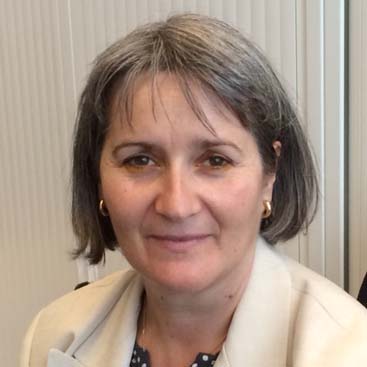
- Isabelle Andre
- Director, Regional Cash Management Sales, BNP Paribas

- Makoto Hasegawa
- Head of Transaction Banking Japan, BNP Paribas
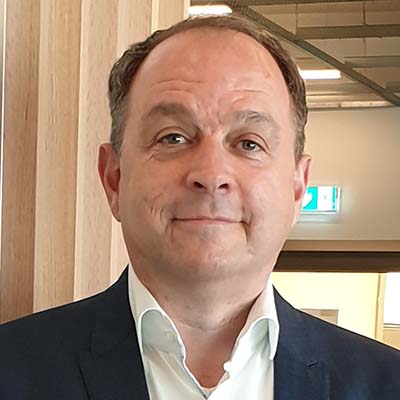
- Olaf Zimmlinghaus
- Vice President EMEA – Corporate, Nippon Express Europe
Nippon Express has transformed its approach to cash management, consolidating 96 local bank relationships in Europe into a single structure with BNP Paribas. The project gives treasury sharper visibility, stronger governance, and a seat at the centre of the group’s worldwide ambitions.
Logistics is a business of precision where goods must be in the right place, at the right time, under the right conditions. For Nippon Express, headquartered in Japan and aiming to operate as a truly global forwarding company, the same principle had to extend to finance.
That ambition came into sharp focus in Europe. Local subsidiaries managed their own banking relationships, often long-standing and reliable but in isolation. Seen from the centre, the picture was fragmented: dozens of banks, different cut-off times, inconsistent service, and little consolidated visibility.
Olaf Zimmlinghaus, Vice President EMEA – Corporate, Nippon Express Europe, explains: “The needs outside of Japan were different, and that was the big trigger for us. If we want to be global in logistics, we need to be global in finance and banking as well.”
The solution was to bring visibility and control back to the centre. By establishing a pan-European cash pool, the group could consolidate accounts, centralise liquidity, and give treasury the means to deploy surplus cash where it was needed most.
The stakes were high. Shareholders expect dividends, not idle balances stranded in local accounts. Growth requires investment, not inertia. The project to overhaul European cash management was framed from the outset as a way to globalise finance in line with operations. This project would create the visibility and governance to enable treasury to fund expansion from within before turning to external debt.
“We had 96 banks in the EMEA region,” Zimmlinghaus reflects. “This was not the set-up, the governance structure, or the efficiency required for a global forwarding company like Nippon Express.”
Europe sets the stage for change
The project took root in Europe for good reason. The region touched nearly every market where the company operated, and the sheer scale demanded coordination. The challenge was to create a structure broad enough to cover the region, yet simple enough to run.
“Our head office in Japan encouraged us to think globally,” says Zimmlinghaus. “Europe stood out because it is complex in scope but easier to handle in currency terms. With one euro currency, we could bundle the financial power of the region.”
The problem was not a lack of liquidity but how it was used. Subsidiaries often held surplus balances with local banks, earning little and contributing nothing to the group’s broader needs. The pool offered a way to bring that liquidity together.
Zimmlinghaus recalls: “What we wanted was to use our working capital to finance growth in Europe, not have it parked in local accounts.”
That imperative carried a governance dimension too. Headquarters wanted assurance that cash was being managed efficiently and transparently, with a structure that made sense for a global player.
“Cash is king,” Zimmlinghaus observes. “It is not the company’s money or the region’s money. It is shareholders’ money, and we have to take care of it properly.”
That conviction set the stage for a fundamental reset of how cash was managed. The existing patchwork of 96 local relationships had to give way to a single, scalable platform.
From many banks to one partner
The starting point was to launch an RFP for a pan-European cash pooling structure. Four institutions were shortlisted: two Japanese and two European. The competition weighed cost alongside service, coverage, and the ability to partner on the ground.
BNP Paribas emerged as the preferred choice. It offered the regional scale to cover Europe, the local teams to support subsidiaries on the ground, and the global connectivity to link back to Japan. Long cut-off times and reliable response to issues were not optional extras but critical criteria. So, too, was the bank’s ability to provide consistent standards across the jigsaw of local markets.
“We had to make the best choice for Nippon Express,” asserts Zimmlinghaus. “It was about which one could deliver the right services, the right costs, and the right presence in every country in Europe with specific European needs.”
The decision went deeper than banking services. It required a shift in governance. Previously, local entities had autonomy to manage their banks as they saw fit. Under the new model, Europe’s regional headquarters in Düsseldorf became the control tower. All conversations with the banking partner ran through this central hub. Local one-offs could no longer create inconsistency.
Convincing 17 countries to give up their individual relationships was not easy. “It can be painful to end long-standing relationships,” Zimmlinghaus acknowledges. “We had to explain to some banks that they were not being replaced because of poor performance, but because our philosophy has changed.”
Nine months of deliberation culminated in a decision that set Europe on a new path. What distinguished BNP Paribas was not only its technical capability but also the relationship it had already built with Nippon Express before the RFP.
Isabelle Andre, Director, Regional Cash Management Sales, BNP Paribas, notes: “Any bank can provide solutions, but building up trust takes time. That, for me, was the basis of success for this project.”
Creating confidence, driving change
While trust with the banking partner was established, the more challenging task lay within the organisation. Headquarters in Japan and 17 European countries had to be persuaded that the new structure was both safe and worthwhile.
Makoto Hasegawa, Head of Transaction Banking Japan, BNP Paribas, highlights: “Success for this project depended on involving the Japanese headquarters from the very beginning. It’s that global alignment that makes a project like this possible.”
This alignment had to be demonstrated in practice. Treasury needed to show that joining the pool meant greater security rather than a loss of control.
And Zimmlinghaus points out: “If headquarters were not on board, nothing in the countries would matter. We had to prepare ourselves first, then bring the countries with us.”
The European project office worked closely with the bank’s implementation team. Regular meetings were used to align requirements, train staff, and resolve issues. A two-year plan provided the roadmap, but the day-to-day work required patience and persistence.
Andre elaborates: “It was a partnership built on flexibility. We had to adapt over time, convincing entities, and supporting both global and local needs. Customers evolve, acquisitions happen, and new needs emerge. The solution has to evolve too.”
Internally, training was most essential. Nippon Express staff across Europe had to learn how to use new systems, execute payments, and troubleshoot issues. The regional headquarters in Düsseldorf positioned itself as a helpdesk, able to answer questions and escalate concerns. For example, when recent sanctions on Russia disrupted flows, the central team guided countries through the process, ensuring compliance without halting operations.
“When issues arise, we talk directly rather than send endless chains of emails,” states Zimmlinghaus. “That is how you keep a project moving.”
Inside the pool
That pragmatism shaped the pool itself. At the heart of the redesign was a euro cash pool, centred on Düsseldorf. All European entities were connected, sweeping balances daily into a single hub, while each also retained a USD account to reflect the industry’s needs.
“A major portion of our forwarding industry suppliers, the airlines, transact in dollars, so every country still has a US dollar account,” acknowledges Zimmlinghaus. “But in Europe, the euro pool is the backbone of our cash management.”
A central guarantee facility was layered on top of the pool, available to every country. Instead of arranging separate cash-collateralised lines in each market, entities could now draw on a shared structure. The shift reduced costs, eliminated duplication, and put treasury firmly in control. With guarantees issued centrally from Düsseldorf, the group could support subsidiaries more efficiently and respond to client demands with greater flexibility.
The European headquarters now manages limits, disbursements and reimbursements, consolidating what had once been scattered locally. By acting as steward of the pool, the Düsseldorf team provides not only technical oversight but also a governance model that keeps cash visible, compliant, and productive across the region.
Visibility turns into value
With the cash pool structure implemented and operational, the most immediate benefit is visibility. Treasury sees daily cash positions across Europe. Idle balances that once lingered in local accounts are now apparent, ready to be mobilised.
“Today I’d call it 110% visibility,” says Zimmlinghaus with a smile. “We know what is happening with liquidity, cash in and cash out, every day.”
Dividends now flow up to the European holding company, giving the regional centre its own source of internal funding. That strength enables treasury to support investments and acquisitions without defaulting to external borrowing.
“Nowadays, we finance some of our acquisitions ourselves,” Zimmlinghaus explains. “Without visibility and concentration, we would have been borrowing externally. Instead, we use our own Nippon Express liquidity first.”
The governance benefits are just as significant. Headquarters sees liquidity in real time, assuring that shareholder money is being managed responsibly. Free cash flow is now a tangible metric, not just an aspiration.
A platform for global growth
The pool was never intended as a one-off. From the outset, the project was framed as a pilot. The question was never if it would work, but how far it could be scaled.
“The pilot proved itself,” enthuses Zimmlinghaus. “It worked over the long term, and nobody can deny that. Now the real question is: what comes next?”
The answer is already taking shape. As Nippon Express acquires new businesses in Europe, including logistics firms such as cargo-partner Group and the Simon Hegele Group, treasury extends the pool to cover them. Each new acquisition brings its own banks, systems, and culture. The proven model makes it easier to fold them in with confidence.
Europe has become a showcase for the company’s headquarters in Japan. The lesson is clear: pooling works, visibility matters, and treasury can finance growth from within. That, in turn, has changed treasury’s role. Once focused on local balances and transactions, it now sits closer to the strategic heart of the business.
“We are moving away from pure P&L focus,” Zimmlinghaus reveals. “It’s about return on invested capital, free cash flow, and shareholder value. Liquidity visibility is the foundation for that.”
The project also underscored the importance of cross-border transparency. Headquarters in Tokyo stayed closely involved, expecting regular updates and visibility into the European pool. With BNP Paribas present across both Europe and Japan, the dialogue naturally spanned four parties: the regional headquarters, local subsidiaries, the bank’s European team, and its colleagues in Tokyo.
“This is not a one-off project,” underlines Hasegawa. “It continues to develop, and our role as a global bank is to support that journey.”
The cash pooling template for Nippon Express is now entering a new phase. Asia and the Americas are next, with the model adapted to local currencies and regulations. Headquarters in Japan is already considering how to formalise governance structures, set free cash flow targets, and ensure that finance keeps pace with operational ambition. And the advisory element from BNP Paribas will play a vital role here too.
“Treasury is not static,” emphasises Andre. “Regulations, businesses, and banks all change. Therefore, the corporate-bank relationship has to evolve with it.”
Nippon Express set out to move cash with the same precision as it moves cargo. In Europe, it has done just that. The model now stands ready to be replicated in other regions, adapted to local rules, and refined as the group grows.