
Treasury Strategy & Transformation
Pooling Chemistry
How Sinochem engineered global treasury cohesion.
Published: October 10, 2025


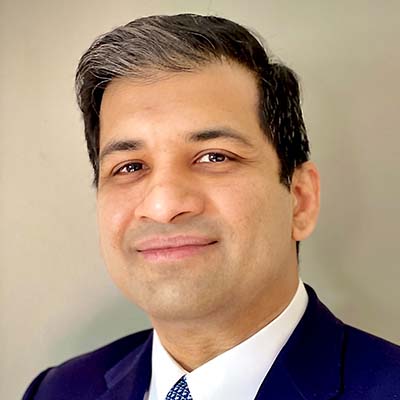

Boston Consulting Group (BCG) has transformed its treasury into a connected, data and analytics-driven operation. The shift delivers sharper visibility, centralised liquidity, and a scalable platform for the next wave of innovation.
For a firm with Boston Consulting Group’s (BCG) global reach, understanding its daily cash position based on spreadsheets sent from dozens of local offices was clearly unsustainable. The approach was functional but fragile. Six years ago, treasury leadership recognised an opportunity to bring the same rigour it delivers to clients into its own operations.
Thomas Balish, the company’s Global Treasurer, recalls: “Our goal was simple but ambitious. We wanted treasury to be worthy of a great company like BCG.”
That became the organising principle for a step-by-step approach that began with cash visibility, moved to centralisation, and then led to automation. Each step unlocked the next. It also set the tone for a programme that deliberately avoided the shiny-object trap. The team would build strong foundations, upgrade the technology to fit the operating model, and only then stretch into advanced use cases.
Amy Goldstein, Managing Director, International Cash Management, Transaction Banking Americas, BNP Paribas, agrees: “Visibility is fundamental. Getting the basics right is what makes everything else possible.”
The drive for visibility was both a technical project and a cultural shift. For years, treasury had relied on local offices to key in cash balances manually each week, a method that slowed decisions and left blind spots. The ambition was clear: a single, reliable view of global liquidity to anchor every other initiative, from cash pooling to automation.
This vision led to a multi-year roll-out of Fides, a multi-bank connectivity platform, bringing data from dozens of banks and countries into Reval, BCG’s new TMS that was selected after a competitive search. The roll-out touched every market, spanning languages, time zones and file formats, but today treasury has daily reporting for more than 95% of accounts, giving a truly consolidated view of cash.
The upgrade changed how decisions were made almost overnight. Decisions about liquidity shifted from instinct to evidence. Idle pockets of cash stood out in black and white, making the case for wider participation in the IHB and laying the foundation for centralisation.
“First, you need your eyes on the cash,” acknowledges Balish. “That baseline enables you to decide where to spend time, what to unlock, and how to optimise.”
With visibility achieved, the team turned to centralisation, expanding the IHB and global cash pool. A structure already existed, but participation was uneven, with only around one-third of entities connected. That has risen to roughly two-thirds, with sweeps automated where possible, as higher interest rates amplified the economic case for change.
One regional programme illustrates the approach. In the Middle East, treasury worked with BNP Paribas and the local finance team to establish a cash pool and automatic cross-currency sweeps into the global header. Pre-set thresholds balance local liquidity needs with the imperative to centralise dollars. The effect has been to move tens of millions of idle dollars into the global cash pool, where it can be invested, deployed, or offset against overdrafts.
“It is a no-brainer once you see the numbers, but it is complicated to set up,” Balish admits. “Automatic cross-currency sweeps were not common in that market. We built on our existing structures but pushed them further, innovating as we went.”
BNP Paribas played a central role in making the structure work, bridging local requirements with the global pool. As Mohammad Bari, Director – International Cash Management, Transaction Banking Americas, BNP Paribas, explains: “We worked closely with Tom and the local team to build that regional pool and set up the cross-currency sweeps. It’s a structure that didn’t exist in that market before, and now tens of millions of dollars are being put to work more effectively.”
That playbook is being applied across BCG’s global footprint. Rolling out a consistent model across dozens of countries and currencies has meant navigating a patchwork of tax, regulation, and infrastructure. Some countries are straightforward, while others require bespoke workarounds. The point is not that every market looks the same, but that every market yields to the same logic when the data is credible and the operating model is clear.
From the start of BCG’s treasury transformation, smart system choices underpinned efforts to see and centralise cash, creating a base for the next wave of automation. For example, Reval was selected as the TMS because it fit the firm’s scale and complexity while offering strong FX capabilities without the overhead of a heavyweight platform. It now anchors weekly exposure analysis, hedge adjustments and automated FX execution. By linking cash visibility from Fides with real-time exposure data, BCG has turned what was once a highly manual process into a seamless workflow.
“We didn’t need the most advanced or complex platform,” Balish reflects. “We wanted what was right for our scale, with excellent FX capabilities and the ability to grow with us.”
On the enterprise side, the firm is implementing SAP S/4HANA. Now, payment files flow from SAP, through Fides as the bank communication provider, to partner banks, with Swift connectivity and standardised ISO 20022 formats.
Bank statements flow back automatically and reconcile with minimal manual work. That sounds simple, but across 55 countries, it can be challenging. Yet the path is well defined, and every step forward strengthens the next. STP cuts risk, while standard formats remove many of the failure points that plague cross-border payments. Central onboarding reduces duplication and inconsistency.
“We are moving payments to a handful of global banks and automating the process end to end,” Balish asserts. “SAP is a highly capable system, and we are committed to using it properly.”
Goldstein concurs: “The glamour is often in AI or real-time, but the gains come when files, formats, and statements run cleanly. That is where control and scale live.”
For all its technical ambition, BCG’s transformation has been just as much about the people involved. Local offices had long managed day-to-day cash with deep knowledge of their markets and strong ties to local banks. The long-term plan is to move those processes into regional treasury centres.
More broadly, centralising treasury activity meant bringing local teams on board with a new way of working. Treasury spent months winning hearts and minds, explaining how stronger controls and a central team would free offices to focus on higher-value work. The message was simple: centralisation wasn’t about taking away responsibility, but about giving offices the support of a specialist team with access to global systems, best practices, and market expertise.
“Buy-in is fundamental, but it’s not a given,” reveals Goldstein. “Even the best operating model can fall short if local teams don’t believe in it.”
Those conversations have also surfaced opportunities to build talent. BCG is known for its rigorous approach to people development, and treasury is no exception. Rotational programmes bring in students with a blend of finance and technology skills, helping to bridge generations and inject fresh thinking into data analytics and automation. Some recruits now arrive with fluency in tools like Python or Power BI, teaching the existing team as much as they learn themselves.
“Students have been a huge asset,” enthuses Balish. “They bring in knowledge of the latest technology and push us to think differently. It’s been a win-win for everyone.”
BNP Paribas has mirrored that philosophy on the banking side, with rotational schemes giving young bankers exposure to both corporate treasury and transaction banking.
“If I were hiring for treasury, I’d love someone who had spent time at a bank,” says Goldstein. “And from our side, we value talent that understands corporate life. It’s the perfect foundation for collaboration.”
These investments in people have made the operating model more resilient. Treasury now has a deeper bench of expertise and a network of advocates across the firm, both of which will be crucial as centralisation continues.
BCG’s approach to AI is pragmatic. Experiments so far have targeted areas with rich data and measurable outcomes, such as cash forecasting and payment screening.
“I am interested in how banks, treasury systems and connectivity providers will embed AI so it is easy for practitioners,” notes Balish. “It makes more sense than thousands of companies building tools alone.”
The greater priority is building a robust data foundation. Treasury and accounting information are being consolidated into a single store with standardised layers and Tableau reporting. “Get all the data in one place, standardise access, be confident in it,” Balish advises. “Then the analysis really starts to work.”
Governance underpins that vision. Treasury has operated under an agile IT model for three years, with a dedicated squad that has built deep expertise and accelerated change delivery. Large projects, like the regional operating model, are tested extensively before roll-out.
“We are all technology managers now,” Balish points out. “Products and platforms are part of the job. The discipline is to pick high impact projects and prove the return.”
Delivering that vision has required more than sound systems. The scale of BCG’s treasury transformation depends on tight co-ordination between teams and partners, from the company’s Boston headquarters to every local office. Internal teams in accounting, tax, and technology are in the trenches with treasury, particularly in complex regions such as the Middle East.
On the external side, BNP Paribas acts as a core bank, with other global banks part of the network where appropriate. Fides handles connectivity, Swift provides the rails, and ISO 20022 ensures a shared language for payments.
The point is orchestration. Treasury acts as the quarterback, co-ordinating regulatory nuance, bank connectivity, file formats, and controls. The aim is simple: standardise what should be standard and tailor only what must be.
“Bringing resources together on both sides and creating buy-in is the job,” Goldstein highlights. “That is how complex organisations move.”
A treasury transformation of this scale is already a significant achievement, but the momentum shows no sign of slowing. The next phase is about scaling what works and deepening automation. The regional treasury model will extend beyond North America, supported by SAP as the backbone for payments and reporting. Automation will deepen in FX, cash positioning, and reconciliation, while the data layer is being strengthened to unlock richer analytics and AI embedded where it adds value.
On the banking side, APIs are expected to play a larger role as standards mature, helping deliver instant confirmations and faster reconciliation. “APIs and AI have real potential, and once the foundations are fully settled, they will make processes faster and more efficient,” says Bari.
For treasurers, the opportunity is to take those advances and make them count at scale. “We can bring in best-in-class technology and practices and roll them out to the entire company,” Balish concludes. “That’s what excites me. It’s not about novelty, it’s about impact at scale.”

This article is available to listen to
How Sinochem engineered global treasury cohesion.