
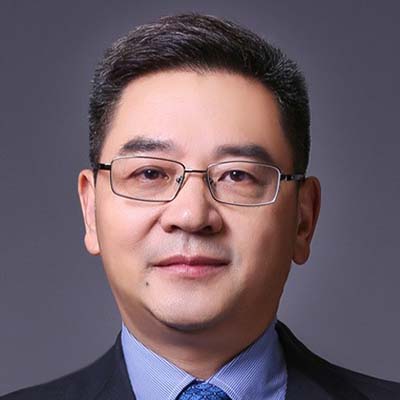
- Mr Chen Shu Min
- Deputy Chief Financial Officer, Sinochem Holdings Corporation Ltd; Deputy Director and General Manager, Sinochem Hong Kong (Group) Company Limited

- Ms Guo Ting
- General Manager of Sinochem Hong Kong Capital Management Co., Ltd; General Manager of Capital Markets Dept , Sinochem Hong Kong (Group) Company Limited

- Norbert Braspenning
- Managing Director Asia Pacific, BMG
How Sinochem Engineered Global Treasury Cohesion
Through significant mergers, complex subsidiary integrations, the use of an innovative notional pooling solution, and the establishment of a cutting-edge Hong Kong treasury centre, Sinochem Group has spent almost two decades perfecting the art of global liquidity management. Here’s how the business reached the top of its game, with help from banking partner Bank Mendes Gans, a part of ING.
When Lehman Brothers collapsed in September 2008, sending shockwaves through global financial markets, Chinese company Sinochem Group faced a stark reality. International operations spanning energy, chemicals, and commodity trading across multiple continents were suddenly exposed to frozen credit markets, volatile exchange rates, and fragmented liquidity management that left surplus cash stranded in one country while subsidiaries borrowed expensively in another.
As Mr Chen Shu Min, Deputy Chief Financial Officer, Sinochem Holding Group, and Deputy Director and General Manager, Sinochem Hong Kong (Group), recalls: “Global stock markets plunged, credit markets froze, and for many Chinese multinationals, the impact was severe. Financing conditions deteriorated and market demand fell.”
Against this backdrop, the company decided to embark on an ambitious journey to revamp its treasury processes and structure. At the time, liquidity was fragmented across subsidiaries and jurisdictions – a common situation among Chinese MNCs. As a result, surplus cash in one country was often inaccessible to entities in another. Intercompany loans were used to bridge gaps but these introduced administrative overheads and tax exposure, particularly in regions with complex transfer pricing rules.
At the time, there was no easy way for Sinochem to manage funds globally. Because, without a centralised liquidity structure in place, visibility was limited and governance frameworks were inconsistent. Treasury needed a platform that could support the group’s international footprint, meet emerging regulatory expectations, and provide flexibility in a volatile environment.
ING’s coverage team, together with specialists from Bank Mendes Gans (BMG), a boutique liquidity-management solution provider and part of ING, had already introduced the concept of multi-entity, multi-currency pooling in other geographies and the idea captured the imagination of Sinochem’s team. So, in 2008, the company began designing its first overseas liquidity set-up in conjunction with BMG – not yet a notional cash pool (this would come later) but a structured approach to, eliminate inefficiencies, and lay the groundwork for more advanced solutions.
“We urgently needed a platform that could enable us to transfer funds efficiently,” recalls Chen. “The key requirements were that it had to be compliant, transparent, and easily scalable. And BMG was able to deliver that for us.”
One important reason the solution resonated with Sinochem was its legal and regulatory foundation. “Compared to other banking schemes, the BMG pooling structure is unique,” explains Chen. “The Netherlands, often selected by multinationals as a global treasury centre, has a mature tax and stable regulatory environment. Creating the pool there was a natural way to embed compliance and reduce compliance risk.”
He adds: “The Netherlands has developed fintech and its unique legal structure has avoided controversy. That gave us confidence that we were building on solid ground – not just for our immediate needs, but for future expansion too.”
To that end, the initial implementation provided greater visibility.
Norbert Braspenning, Managing Director Asia Pacific, BMG (part of ING), notes: “What’s important, in my view, is that companies like Sinochem ideally want one platform, one process, and one governance structure globally. That’s incredibly hard when you’re dealing with diverse banking landscapes and highly autonomous subsidiaries. But it’s exactly what we set out to do – ensure that everyone, from head office to local entities, is following the same rules.”
ChemChina joins the journey
While Sinochem was advancing its own treasury infrastructure, another major Chinese company, ChemChina, was charting a parallel course. Though the two groups operated independently at the time, their treasury journeys would eventually converge through a merger in 2021. ChemChina’s parallel progress plays a key part in understanding the scale and sophistication of what Sinochem Holdings has achieved today.
By 2014, ChemChina had begun acquiring international businesses. Each new subsidiary came with its own treasury systems, banking relationships, and governance frameworks. Understandably, this left the group facing siloed liquidity, inefficient capital use, and increasing FX exposure.
To address these challenges, ChemChina launched a formal RFP and selected ING to implement a cross-currency notional cash pool at the holding company level. The goal was to give headquarters more visibility and control, while still preserving local autonomy and operational flexibility.
“This was a turning point,” says Braspenning. “ChemChina brought significant scale but also incredible diversity in currencies, time zones, and regulatory complexity. We needed to prove that the BMG structure could accommodate that kind of operational landscape without disruption.”
Thankfully the team managed to do just that – and the structure meant that ChemChina could centralise global liquidity, optimise funding internally, and reduce reliance on external borrowing. The set-up also provided new capabilities for FX exposure management, enabling the group to offset natural positions across subsidiaries.
This wasn’t just a technical lift, however. It also required a sensitive approach to engaging subsidiaries that were used to acting independently. As such, the BMG team worked closely with ChemChina’s finance leadership to build internal trust and demonstrate the benefits of group-wide co-ordination.
“We focused on enabling rather than mandating,” Braspenning notes. “The strength of the BMG platform is that it supports efficiency without undermining local control. We come from a corporate background – we have corporate DNA – and we see ourselves as a tool in the treasury toolbox. You can plug us in but still use intercompany loans, capital injections, swaps etc. We’re an add-on that enables companies to do certain things more efficiently.”
Although this phase of treasury transformation was distinct from Sinochem’s own journey, it laid essential groundwork. When the two groups were merged in 2021, each came with deep experience in managing complex, international liquidity structures – a fact that made the next stage of integration much simpler.
Starting a new joint chapter
In May 2021, Sinochem Group and ChemChina were formally merged under the direction of the State-owned Assets Supervision and Administration Commission (SASAC) of the State Council. The creation of Sinochem Holdings Corporation Ltd. brought together two of China’s largest industrial conglomerates, with operations in more than 100 countries and a combined revenue exceeding US$100bn.
The objective of the merger was to eliminate duplication, streamline decision-making, and strengthen the global competitiveness of China’s industrial supply chains, especially in chemicals, agriculture, and energy. As Chen summarises: “After the merger, we moved from ‘resource-oriented’ to ‘capability-oriented’ – integrating global financial resources while enhancing co-ordination and innovation.”
For treasury, the implications of this shift were immediate. Each legacy group had its own liquidity structures since ChemChina’s notional pool and Sinochem’s earlier centralisation efforts had evolved separately. Keeping both would limit the group’s ability to optimise liquidity, reduce funding costs, and deploy capital efficiently.
“Maintaining two pools added unnecessary management and financial overhead,” says Chen. “It was immediately clear that we needed a single, unified structure that could support the group in its new form.”
ING was brought in to merge the existing systems into a consolidated BMG cash pool, designed to operate across jurisdictions, currencies, and regulatory environments, while remaining compliant and auditable. “Multinationals will always deal with multiple banks. That’s why you need something that sits on top of that complexity,” explains Braspenning. “Our solution is a flexible, adaptive layer that can cope with spin-offs, acquisitions, mergers, or changing intercompany funding needs. That’s the only way to stay future-ready.”
Despite being a trusted solution, this wasn’t a lift-and-shift, notes Braspenning. “We spent time re-evaluating every component, from documentation to technical integration, to ensure the new pool wasn’t just functional, but fit for purpose across the group. The project also had to account for different ERP systems and data flows. BMG’s team worked in tandem with Sinochem’s internal IT function to build connectors that could harmonise reporting and enable automated sweeps and reconciliations, regardless of local systems or providers.”
He adds: “One big challenge is that listed subsidiaries can’t always join a group cash pool because of stock exchange rules. Our systems didn’t support that back in 2008. But today, we’ve evolved to ring-fence divisions – either for reporting or full legal separation – so clients can still benefit from a unified platform without crossing regulatory lines. And this has been perfect for Sinochem.”
The implementation took place over several phases, beginning with a detailed review of both legacy set-ups. Each participating entity had to be assessed individually. The phased approach meant that treasury could continue to operate without disruption, while progressively expanding coverage and visibility.
Chen adds: “Bringing teams from both former groups onto one platform also meant unifying mindsets. Treasury leadership hosted joint workshops, provided detailed training materials, and worked closely with regional CFOs to align on benefits and address concerns around control or visibility. These sessions played a critical role in building buy-in and ensuring that operational changes were smooth rather than disruptive.”
Operational now for several years, the merged pool has enabled Sinochem Holdings to aggregate global liquidity, reduce external borrowing and improved responsiveness to FX market movements. Liquidity is now visible at a glance, with central teams able to model scenarios and forecast needs far more accurately than before. Importantly, the structure also retains fund ownership at the local level, meaning that subsidiaries can maintain operational independence while participating in a group-wide structure.
Chen notes: “The structure has helped us reduce leverage and smooth liquidity deployment. It also improved how we collaborate with subsidiaries, giving them cutting-edge tools without imposing central control. It has truly been a game-changer.”
Hong Kong takes the lead
But the team was not content with stopping there in its treasury transformation. In August 2024, Sinochem formally launched its Hong Kong Treasury Centre – Sinochem Hong Kong Capital Management Company Ltd. This bold move marked a significant strategic shift, bringing treasury governance, oversight, and execution under one roof in a global financial hub.
“Hong Kong provides access to deep RMB liquidity, a stable tax regime, and a mature banking ecosystem,” explains Chen. “It’s an ideal location for us to manage the international side of our business.”
The Hong Kong Treasury Centre oversees global capital management, FX risk control, and cross-border funding. It also plays a key role in the ongoing evolution of the BMG cash pool, which now supports notional pooling across 32 currencies and dozens of legal entities.
Chen is clear on the function of the centre: “It’s not a money transfer station. It’s our global treasury brain. From here, we plan, co-ordinate, and control. It’s the nerve centre in every way.”
And as Braspenning explains: “The integration with BMG enables that nerve centre to undertake real-time monitoring of global cash positions, automated sweeping, and seamless in-house bank capabilities.
“The BMG cash pooling solution is also extremely scalable, meaning that the Hong Kong Treasury Centre is much more than an operating unit. It is a structural response to complexity, designed to manage growth without adding overheads. Subsidiaries benefit from greater consistency and reduced friction, while treasury gains the ability to deploy capital precisely where and when it’s needed. And BMG has people on the ground in Hong Kong to help with any client requests to ensure everything runs as smoothly as possible at all times.”
Continuous progress ahead
Sinochem’s next milestone is fully onboarding all international subsidiaries into the BMG pool by 2026. This includes entities that have only recently joined the group, or which operate in more regulated markets requiring tailored onboarding paths.
“The structure is already delivering huge value but bringing everyone in requires patience and planning,” emphasises Chen. “We’re aligning systems, reconciling legal structures, and ensuring that everything meets both local and group-level compliance standards.”
One area of focus is improving FX risk mitigation through the pool. Rather than relying on swaps and forwards, treasury is now able to use natural hedging strategies, leveraging inflows and outflows in different currencies to reduce volatility and cost.
“We’re also using the flexibility of the pool to do more than just centralise cash,” Chen points out. “It enables us to be smarter in how we manage exposure, and that’s a significant advantage.”
Braspenning agrees: “Working with Sinochem from the early days, we’ve seen a transformation, not just of systems, but of mindset. The company has moved from basic centralisation to building one of the most agile and forward-looking treasury operations in the market. This is the kind of maturity you want in a global treasury function – dynamic, data-informed, and structurally aligned with how the business actually operates.”
Treasury as a catalyst for global growth
In short, what Sinochem has built is much more than a cash pool. It is a treasury framework that supports decision-making, reduces cost, and improves the group’s ability to act –across borders, currencies, and structures.
From initial centralisation in 2008 to the post-merger redesign in 2021 and the launch of the Hong Kong Treasury Centre in 2024, Sinochem’s journey reflects a consistent, disciplined evolution. And it’s far from over.
“We’re not just on a treasury transformation path,” concludes Chen. “We’re building infrastructure for the next stage of our global growth. That’s how treasury continues to add real value to the organisation.”
View the shorter version of this article here
Key takeaways
- Resilient response to crisis. Sinochem began transforming its treasury after the 2008 financial crisis exposed the risks of fragmented liquidity.
- Innovative pooling solution. Working with BMG (part of ING), Sinochem implemented a multi-entity, multi-currency notional cash pool based in the Netherlands — enabling global liquidity management.
- Group-wide integration post-merger. Following the 2021 merger with ChemChina, Sinochem consolidated both groups’ pooling structures into a single, flexible platform that supports 32 currencies and dozens of entities — with automated sweeping, real-time reporting, and ERP integration.
- Strategic treasury centre in Hong Kong. In 2024, Sinochem launched a dedicated offshore hub to oversee global cash, FX, and funding activities — serving as the ‘treasury brain’ for international operations.
- Ongoing evolution to 2026. Sinochem is onboarding remaining subsidiaries into the pool, expanding natural hedging capabilities, and reinforcing treasury’s role as a catalyst for strategic, data-informed growth.