
On the fourth anniversary of Russia’s invasion of Ukraine, Oleh Kurinnyi, a global treasury and operations specialist who experienced the horror of the attacks on Kyiv, recounts how his bank prepared for, and remains subject to, the worst of times.
Our lives are characterised by different phases: sometimes they are calm and measured, while at other times everything changes suddenly and unpredictably. Anticipating these changes, preparing to overcome negative scenarios, and perhaps even seizing new opportunities for development is the task of risk management, which in times of extreme turbulence becomes crisis management.
A simple example of risk management is how we take an umbrella or raincoat on a walk, even though the sun is shining and the sky is cloudless, knowing that there’s a certain probability of rain in a few hours. Irish people will understand the concept of ‘four seasons in one day’. On a far grander scale, we apply the same approach, planning missions to the Moon and Mars with the prospect of establishing human colonies, fearing for the future of humanity amid Earth’s rapidly changing climate and vulnerability to cosmic disasters, such as an asteroid impact.
However, the most sophisticated and multilayered risk management system has evolved in the financial sector, where treasury plays a key role. ‘Money loves silence’ is a fundamental principle of financiers who have cherished privacy and discretion since ancient times. Today though, for some, this has morphed into ‘money loves hedged risks’.
While operations in the FX and money markets to hedge exchange rate and interest rate risks have become a daily routine, preparing and implementing a set of measures in the event of force majeure, when the very existence of a company, business, and national stability are at risk, is the fine art of crisis management.
The best of times… the worst of times
Unfortunately, human history is littered with economic crises, wars, and natural and man-made disasters. The globalisation of the world economy means that crises spread more quickly from their epicentre to surrounding countries and continents. However, thanks to the development of IT and international co-operation in finding solutions, these crises resolve more quickly.
The Great Depression of the early 20th century lasted 10 years, from 1929 to 1939. The global financial crisis, triggered by the US housing bubble, entered its acute phase in 2007-2008 and continued in its active phase until approximately 2009-2010. Everyone remembers the sharp slowdown in the global economy in 2020 due to the Covid-19 pandemic, but a year later, financial markets stabilised, and a medical mask forgotten in the pocket of an old jacket was already a source of amusement.
In both the 20th and 21st centuries, during crises, the intensification of government economic management played a decisive role: the launch of public infrastructure projects and traditional monetary policy methods, making cash more accessible to businesses through central bank rate cuts. But while the Great Depression ended with global economic growth spurred by the lead-up to and outbreak of the Second World War, modern global crises are being overcome through the use of new monetary methods.
One such method is quantitative easing (QE), used by central banks to stimulate the economy. This method involves the large-scale purchase of financial assets (usually long-term government bonds) from commercial banks and other financial institutions using ‘new’ electronic money. Direct government investment in distressed businesses and banks is also widely used.
Treasurers now face risks that have become more interconnected, cross-functional, and financially significant than at any time in the past decade. Geopolitical instability has entered the top 10 risks for the first time, along with cyber risks, increased exposure to sanctions and trade tariffs, currency fluctuations, and counterparty risk.
For Ukrainian banks and companies, the main risk now is the threat of loss of operations due to physical destruction and loss of energy supply, as well as war-related labour losses.
Building resilience
Even a decade ago, my main concern as treasurer of the Ukrainian Credit Dnepr Bank was hedging the risk of liquidity loss by creating and maintaining a safety cushion of unencumbered high-quality liquid assets (HQLA). This took the form of cash and equivalents, short-term securities such as government bonds and deposit certificates of the National Bank of Ukraine (NBU), the state central bank.
The minimum size of the safety cushion is dictated by the liquidity coverage ratio (LCR) and net stable funding ratio (NSFR), approved under Basel III. The LCR goal is to ensure that the bank has sufficient HQLA to cover its net cash outflow within 30 calendar days under stress. The NSFR limits over-reliance on short-term wholesale funding and encourages the use of more stable (long-term) sources of funding for assets.
The maximum size of a bank’s safety cushion is determined by bank management, based on the strategic objectives set by the bank’s shareholder, as well as the bank’s risk appetite. It is well understood that HQLAs typically have lower returns than corporate credit products and alternative capital market investments.
My treasury carried out a great deal of work over the past decade with the state central bank. First, the NBU began conducting annual stress testing of banks under its jurisdiction in accordance with the requirements of EU financial authorities. I participated in the preparation of probable development scenarios for the bank, taking into account optimistic and pessimistic forecasts for events in international and local markets, as well as a gap analysis of the bank’s assets and liabilities.
Second, drawing on the experience of central banks in the US and EU during the 2007-2008 crisis, the NBU reformed the system for providing liquidity to Ukrainian banks. It moved from one-time loans based on paper agreements, to an automated revolving credit line (RCL) with a flexible pool of collateral in the form of the aforementioned government securities.
Furthermore, we entered into several interest rate swaps (IRS) with the NBU, hedging the risk of interest rate changes, which preserved the bank’s profits from government bonds when rates rose due to new challenges.
An important experience for me was actively participating in, and co-ordinating the preparation for the bank’s Anti-Crisis Activity Plan. It detailed the actions of each department in the case of a threat to the bank’s stability. Such threats were considered, at the time, as likely to be caused by negative changes in financial markets (both international and local), as well as by a loss of solvency due to cyber risks, power outages, and physical threats to bank staff. The plan was thoroughly tested by dedicated NBU representatives and proved extremely useful in the subsequent crisis years.
Moving towards extremes
In the event of a threat to a bank’s solvency, treasury’s task is to initiate the approval of a crisis status by its Asset and Liability Committee (ALCO) and to activate the bank’s Anti-Crisis Activity Plan. These immediate actions should result in a reduction in outflows – reducing new loan issuance, extending deposits, and negotiating with investors on debt restructuring. It should also increase inflows by attracting new and extending existing loans and investments, driving early repayment of previously issued loans, and obtaining refinancing loans from the central bank.
The first serious challenge for my Ukrainian bank was the Covid-19 pandemic in 2020-2021. The main challenge was the need to minimise face-to-face contact between employees. The treasury, working with the bank’s cyber-security team, successfully addressed this challenge, enabling all necessary transactions to be conducted online from home, including managing Swift payments, concluding trades on Bloomberg and Reuters trading platforms, and executing credit and deposit transactions with the NBU.
Although our liquidity level did not drop to a critical red line during this period, we conducted several test transactions to attract loans from the NBU under the RCL, and also practised regulating incoming and outgoing cash flows using other methods described above.
An important learning experience was the creation of several backup bank offices in various cities across Ukraine. These were equipped with diesel generators for data centres and customer service, as the pandemic’s severity varied across regions. As far as the cyber-security team was able, information flows were migrated to cloud-based solutions using blockchain. The bank’s clients were satisfied with their online experience using the bank’s improved mobile app.
This all proved to be a trial run for a much more complex and frightening challenge coming our way.
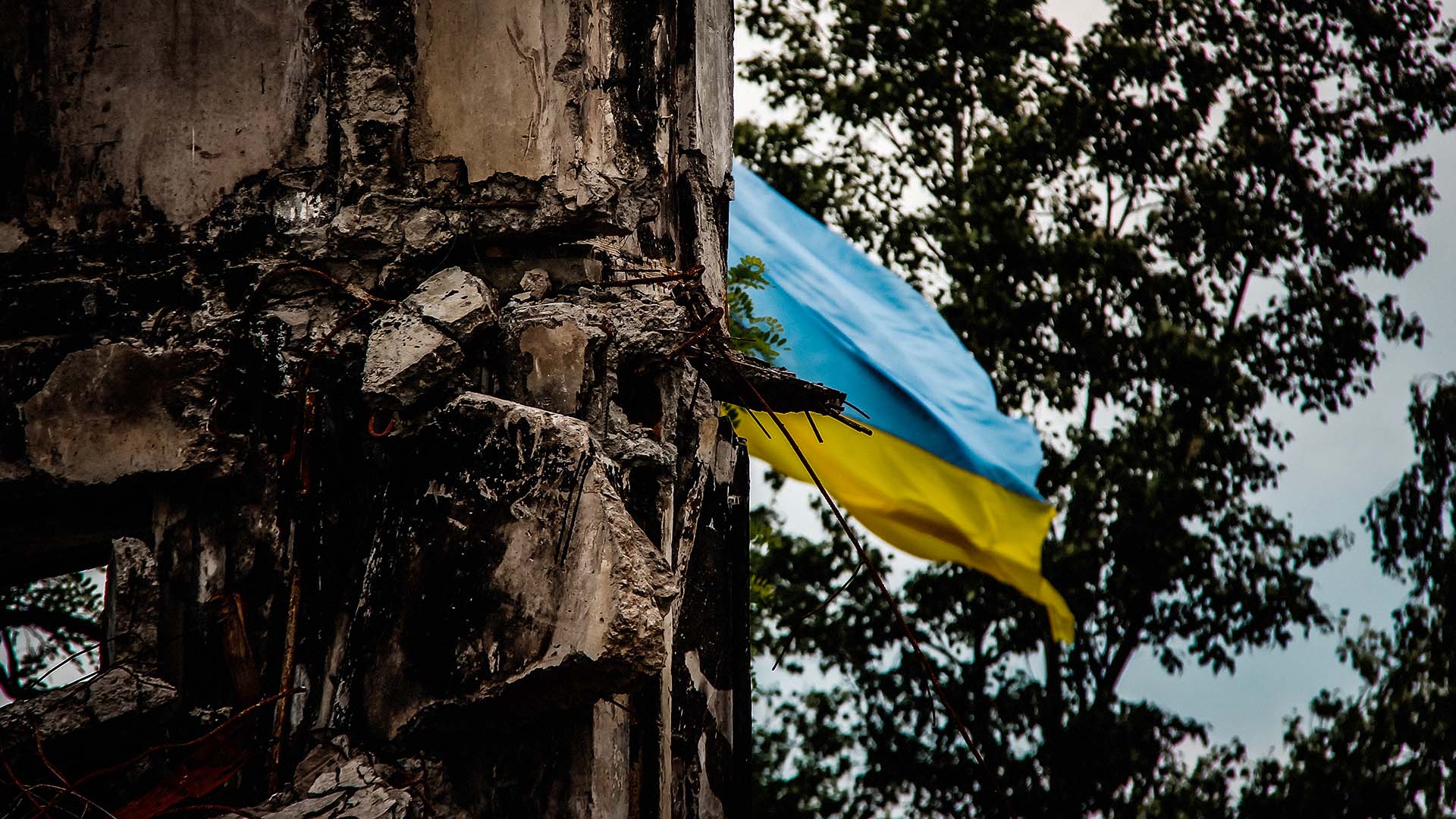
On February 24, 2022, the Russian army’s invasion of Ukraine began. Over the first two days, the invaders’ tanks came very close to Kyiv, where the bank’s head office, including the treasury, is located.
Every night, dozens of drones and missiles flew from the aggressor country toward Kyiv and other Ukrainian cities, bringing death and destruction. Hundreds of thousands of men and women volunteered to join the Ukrainian Armed Forces to protect their homes and families. Millions of Ukrainians fled and became refugees in the EU, the UK, the US, Canada, Australia, and other countries that kindly provided protection and assistance.
Crisis action
From the first days of the war, treasury strictly followed its Anti-Crisis Plan. Every morning, we held online meetings to discuss each team member’s actions for the immediate future. The big difference from working during the pandemic was that each of us was not in the comfort of our homes, but in hotels, trains, cars, basements, or simply outside en route to safety. Each team member not only performed their own functions but also duplicated their colleague’s competencies, as not everyone could fully perform the work 24/7.
Every day, we reported to the bank’s top management on the liquidity situation and discussed the necessary actions by the shareholder and the central bank. We took advantage of a special offer from the NBU, receiving a 12-month stabilisation loan without collateral for urgent client payments. Looking back, I can say that we managed to repay this loan early, after just seven months.
In March 2023, the NBU was named Best Bank of the Year by the Central Banking Awards, receiving international recognition for its effective operation in 2022 amid a full-scale war. That same year, the Federal Reserve and the European Central Bank used similar tools to support liquidity in the US and EU banking systems during the crisis associated with rising interest rates and the bankruptcy of SVB and Credit Suisse.
Life continues
On a personal level, while my son continues to help defend Ukraine as part of the armed forces, the rest of my immediate family and I were fortunate to find refuge in Ireland. Thanks to the well-organised work of the immigration service and volunteers, we were quickly placed in state housing. I continued working online at my Ukrainian Bank until November 2022. Through the combined efforts of the treasury team, we managed to maintain the bank’s solvency, and support our clients during this difficult time.
February 2026 marks the fourth anniversary of this terrible ongoing war. Not a single region of my homeland remains safe. Credit Dnepr Bank continues to operate despite the fact that its head office in Kyiv was destroyed by a Russian missile strike in the summer of 2025. The resilience of the Ukrainian people inspires faith in a beautiful, peaceful future. I hope the forces of good around the world will support my motherland on this path.
Since 2023, I have been building my career in Ireland. I have gained fantastic experience in global tech companies and international banks. The Irish Association of Corporate Treasurers (IACT) recently welcomed me into its ranks. This is a great honour for me. I look forward to continuing to share my experience of crisis management in treasury during periods of extreme turbulence with my colleagues to help them be prepared to face these challenges.