
- Tom Alford
- Deputy Editor, Treasury Management International
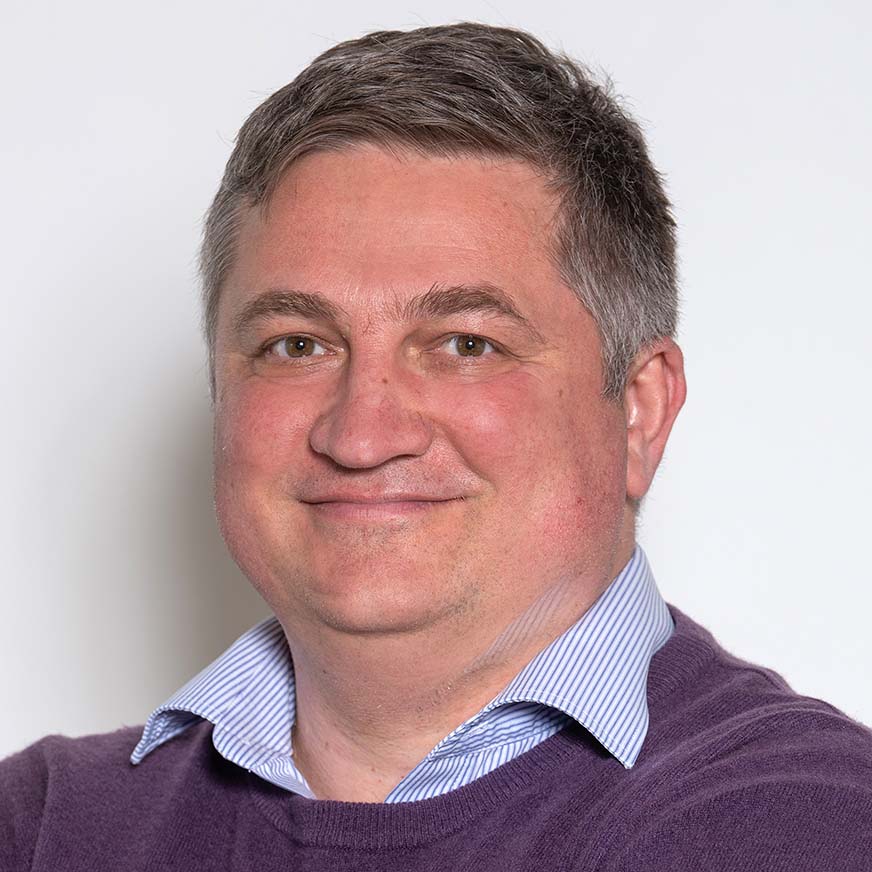
When a life is torn apart by war, the welcome embrace of another country can make all the difference. Oleh Kurinnyi, a global treasury and operations specialist, tells TMI about his new beginnings in Ireland as he seeks to build upon his already impressive portfolio of experience.
In early 2022, the war in Ukraine finally forced Kurinnyi to seek shelter for his family in Ireland. While his son dug in on home soil, helping to defend the country as part of the armed forces, Kurinnyi was granted Temporary Protection status by the Irish Government. Not only did this afford him immediate, full access to the labour market, but it also enabled him to bring his daughter, wife, and mother to safety, and a more optimistic future.
The level of help offered is not lost on him. Indeed, he candidly declares: “I am extremely grateful to the Irish people and government for their support and for saving my family from the war.”
Seeking refuge in Ireland in particular was, in part, instructed by a long-held dream of visiting the country, Kurinnyi reveals. “As a financial professional, the more recent economic success of the Celtic Tiger had really impressed me. But I have to admit that our family has also always been fascinated by Irish history and culture.”
There were, in fact, many modest cultural connections steering Kurinnyi in the direction of the Emerald Isle. His daughter, for example, given to “avidly devouring Oscar Wilde”, and his mother a devotee of “old Irish folk remedies”. But in the end, more practical matters brought the Kurinnyi family to Ireland.
With many Ukrainians studying English since childhood, and his own fluency in the language readily apparent, it made sense to seek out an English-speaking destination. However, while the UK, US, Canada, and Australia all required visas with an invitation, and none offered long-term support, the Irish Government was far more open in its conditions of acceptance of Ukrainian refugees.
Of course, Kurinnyi had long been able to call upon his language skills in his work in the global financial markets. As Head of Treasury and leader of the Asset-Liability Committee at the Kyiv-headquartered Credit Dnipro Bank (its offices damaged in a Russian missile attack in August 2025), he had been fully immersed in the successful financial markets activities of one of the top 20 FIs in Ukraine.
At a professional level then, arrival in Ireland was naturally “a great opportunity to continue my career in the financial sector”. And, mindful of the future success of his family, the country also presented them with a solid base. His wife has been working as a data analyst at the Irish industrial moulding company Mergon since 2022, and his daughter is now on the path to “a competitive European education” at college and university.
Making it home
The move to Ireland for Kurinnyi is far from a simple practical and transactional arrangement during a time of need though. He has been eager to immerse himself in the country’s culture. “During my four years living here, I have learnt a lot about, and fallen in love with, the Irish people,” he reveals . “It was a revelation to me that Ireland is the historical homeland of tens of millions of citizens of the US and Canada, as well as Australia, New Zealand, and South Africa. I’ve also discovered that the Western ‘cowboy’ has its roots here, and even that Halloween started in Ireland as an ancient Celtic festival, some 2,000 years ago!”
Of its more recent developments, Kurinnyi has been quick to appreciate that Ireland is not only a high-tech hub with offices of some of the world’s largest IT companies, but also a centre of gravity for some of the leading US global FIs. He notes that it also plays host to many global consulting giants. “They’re all leveraging Ireland’s natural position at the crossroads of the European Union and the English-speaking world,” he suggests.
Of course, the appeal of the country to a huge number of international corporates is something of which Kurinnyi is fully aware. “Many have established their EMEA headquarters, global financial and treasury centres and corporate service centres here. I immediately recognised that Ireland was a place where I could continue my career in finance and treasury.”
And in addition to all the usual trappings of a well-run country – its strong digital and technological infrastructure in particular resonates with Kurinnyi – he remarks that the Irish lifestyle and focus on family values “deserve a special mention”. And for good reason. When even simple pleasures are threatened by the ravages of war, their value for all is enhanced immeasurably.
“Whatever the weather, I love to see adults and children out jogging, cycling, and swimming and surfing in the sea. And I see them playing their national sports, such as Gaelic football and hurling, and it’s all done with genuine freedom and pleasure.” And, for the same reason, he is moved by how Irish people pay heed to their own culture, noting “it’s a matter of great respect how carefully they are studying and restoring their Gaelic language”.
Keep on carrying on
The move from Ukraine to Ireland for Kurinnyi was never about cutting himself off from what was happening at home. “For almost the entire first year of my life in Ireland, I remotely helped my bank in Ukraine maintain stability during the crisis,” he explains. With his professional acumen to the fore, he set about implementing liquidity support deals with the National Bank of Ukraine, refinancing loans and using tools such as repo transactions, and interest rate swaps, all to help stabilise the business.
While he was engaged in this vital work, Kurinnyi was mindful that there was no way of knowing when life in Ukraine would return to normal. Uncertain as to when or if he might return home, he engaged with a range of online courses, arranged through the Employment for People from Immigrant Communities (EPIC) programme in Ireland.
EPIC, he explains, is a free service run by Business in the Community Ireland (BITCI), set up to help refugees, asylum seekers, and migrants gain skills and find jobs. “I’d like to offer my special thanks here to Maeve Murphy [Lead Trainer] who extended to me all the support and confidence I needed to successfully transition into the Irish business community.”
Acutely aware that financial careers can evaporate quickly if out of the loop for too long, Kurinnyi also seized the opportunity to join Capital Markets, Investments and Trading (CMIT) course at Griffith College, Dublin. As well as honing his existing skills, it gave him much-needed contact with treasurers of Irish banks and companies who were attending the same programme.
Kurinnyi also understands that maintaining sharp-end experience is vital for every professional in this space. A contract opportunity arose for him with Fenergo, a Dublin-based global SaaS company with offices across EMEA, APAC and the Americas. “I gained invaluable experience here, managing corporate treasury during a period of financial transformation, helping to centralise its cash flows, and upgrade the TMS from Sage to Oracle NetSuite,” he explains.
The time with Fenergo was an early professional lifeline in Ireland for Kurinnyi. “I am very grateful to Conor Clinch, Fenergo’s CFO, for believing in me and allowing me to work with his successful multinational team,” he says. But Kurinnyi has also started making valuable connections within the wider Irish treasury community, notably by attending Irish Association of Corporate Treasurers’ (IACT) events, and meetings organised via Mike Richards’ Treasury Career Corner.
Forging a stronger network
“For our first two years in Ireland we lived in a hostel, with 20 other Ukrainian families, in the countryside about 100km outside Dublin,” explains Kurinnyi. Despite the relatively cramped conditions, he explains that all of their daily needs were well-met by the hostel team and its management. “We are very grateful for their support,” he affirms.
The residents shared the goal of quickly integrating into Irish society. “Most of the adults found jobs in local businesses, and all the children attended community college,” recalls Kurinnyi. “But thanks to my good connections, I had the opportunity to take online courses, work remotely with a Ukrainian bank, and then secure temporary assignments with a couple of Irish companies. And, as with many firms in Ireland now, their hybrid working policies enabled me to travel for two to three days each week for team meetings in their Dublin offices.”
With it becoming clear that a move to Dublin was necessary to take on more regular work, Kurinnyi secured a rented house in the city. A Dublin resident for around one year now, he says he is set up to easily work both onsite and online.
Dublin residency has also brought more stability for his daughter. She has recently enrolled at the Technological University Dublin, and is planning a bright future as an interior designer. With his son still part of the armed forces back home in Ukraine, Kurinnyi is naturally worried for him. But for all that his family has been through over the past few years, he remains upbeat, declaring: “I am very proud of my children.”
Valuing roots, welcoming integration
Having endured his own personal and professional upheaval, Kurinnyi admits that it has not been easy to start again with an entry-level job, equipped as he is with two university degrees and more than 25 years’ experience in financial management and treasury. That said, he reports that it has proven a challenge at times to secure work even at ground level.
It seems the application of inflexible HR policy (or worse, AI screening) is failing to recognise personal circumstances, and simply considers him (and many like him) to be overqualified. It’s a serious error of judgment that the HR community needs to rectify, as many more talented individuals – including homegrown students – are seeking to make their way in life.
While Kurinnyi awaits his first management appointment, eager to build his profile in the Irish business community, he remains upbeat. “I’m optimistic about the future, about developing my skills, mastering new systems, and expanding my network among treasurers, financiers, recruiters, and managers.”
What’s more, Kurinnyi harbours no feeling of being an outsider in his new home; quite the opposite in fact. There are many parallels between Ukraine and Ireland, he observes. “Our people are very friendly, hardworking, family-oriented, and able to stand up for their freedom. And due to war, we are now also a nation of emigrants.”
Both nations, he believes, are strong on the values of friendship, support, and adaptability. And Ukrainians, like the Irish, deeply value their roots, history and traditions, “while remaining open to integration with other peoples”.
The similarities continue. Ukraine’s modern commercial history, as with Ireland’s, began in the 1990s, suggests Kurinnyi. “We radically reformed our economies, and opened up to international trade. Local businesses took their first steps in open competition with global companies and banks. Both countries entered the 21st century with double-digit GDP growth rates. Although like the rest of the world, we faced bankruptcies and the transfer of corporate debt to sovereign debt during the global financial crisis of 2008, we both emerged consolidated and modernised.”
Building for success
Today, following the rapid onset of the modern technological revolution, the wider world has seen a massive growth of startups, transition to cloud technologies, and the expansion of online learning and hybrid work. Kurinnyi has been quick to seize the moment.
“I afforded myself the rare experience of working in both bank and corporate treasury, tackling every aspect from cash and risk management, to accounts payable and credit operations. It’s enabled me to accrue a twin global perspective finance, and a deep understanding how to make business processes better. I’d also say that I have a proven capacity to withstand considerable turbulence.”
With plans to continue developing his career in the Irish financial sector, Kurinnyi is currently seeking his next opportunity. “This could be anywhere from an entry-level position, to a management or consulting role where my experience would be fully utilised immediately,” he explains. “But I’m open to new challenges, and ready for success.”
Whatever lies ahead, it’s clear that anyone who can rebuild a life, far from home, having been subject to the horrors of war, clearly has the spirit and determination from which the financial world, especially corporate treasury, would undoubtedly gain.