
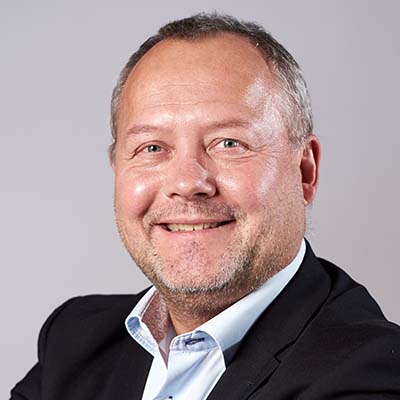
- Piet Waterloos
- Senior Director, Group Cash Management, Radisson Hotel Group
- Tom Alford
- Deputy Editor, Treasury Management International
My Treasury Life Within an International Hotel Group
After 35 years at Radisson Hotel Group, Piet Waterloos, the firm’s Senior Director, Group Cash Management, remains as enthused as ever. What enables a treasurer to feel so at ease in one company for so long?
Radisson Hotel Group is perhaps among the most recognised hotel brands in the industry. As an international provider, operating in more than 100 countries across EMEA and APAC, it has more than 1,600 hotels in operation and under development. With the Group blending three different business models, its finance function, and in particular its treasury, has an abundance of opportunities to demonstrate value to all stakeholders.
The business models provide for three contract types: leased hotels, managed, and franchised hotels. The leased approach sees Radisson rent a building from an owner, for which it pays a monthly or quarterly rent. It will typically set up a separate legal entity to manage it (in some cases it may have multiple hotels under one legal entity) but all balance sheets and bank accounts belong to the Group, and are overseen by the central treasury function.
On the management and franchise contract sides, Radisson will enter into an agreement with a counterparty, such as an institutional investor or even a wealthy individual. The agreement provides the contracted building with Radisson branding and, for managed hotels, assistance in the day-to-day operation of the hotel, for which Radisson will invoice its counterparty.
Small team, big role
The treasury for Radisson Group is based in its corporate office in Brussels. Under Waterloos’ guidance, this small team (3.5 FTEs) has a significant task. It handles group liquidity, under the umbrella of which falls cash forecasting, bank account management, payment and collections governance, cash pooling, and (of increased importance in the current environment) working capital management.
While these are traditional treasury duties, the team executes them across a wide and diverse geographical area, with multiple entities, and all to the tune of that trio of business models. This does create some clear challenges.
“Because of our reach, the recent geopolitical developments, and the extra sanctions screening requirements these have led to, now play a sizeable role in what we do,” notes Waterloos. “Within these restraints, we need to precisely understand what we are permitted to do, and for that, we need to work very closely with our different banking partners.”
With multiple banks on its panel, he explains that treasury frequently reviews how these partners facilitate the Group’s global reach. With the leased hotel business mainly located in Europe, finding “a pretty good spread” to maintain support at a challenging time has seen a most welcome easing of pressure.
However, another constant source of treasury concern is cyber-security. “Every treasury department is a target for fraud attempts,” states Waterloos. “We are continuously looking at fraud detection and prevention, and one of our key efforts, beyond technical solutions, is sustaining employee awareness, not just within our team, but also across the whole group.”
As a widely distributed hotel group, a third concern for treasury is cash visibility and forecasting accuracy. “We developed our own tool, but it’s still mostly a manual task,” reports Waterloos. “We’ve now started to look into AI-based systems to see how these can help us to automate that a little bit more.” The key here, he notes, will be in getting the right financial data in place first so that outputs can be trusted.
Firm footings
Having started out professionally in accounting, spending 12 years in that function with Radisson, Waterloos is on familiar ground when looking at balance sheets and P&L statements. It has given him an understanding of the importance of data accuracy. But his accounting experience also afforded him a firm grasp of how the company’s operational activities directly connect to financial outcomes.
“I believe that an accounting background provides an excellent basis for treasury decisions. When you have a solid understanding of the balance sheet, it’s easier to make the link between how revenues are generated, how payments are made and collected, and what the P&L implications are of your decisions around those.”
His long tenure in accounting has also given Waterloos an enduring connection with that team. “I’m in constant dialogue with them, and actually with the whole Radisson finance community,” he reveals. “So whenever the need arises for advice or information, they know they can come to me.”
Of course, the flow of conversation is two-way, with treasury proactively providing the business with information and guidelines on topics Waterloos believes will benefit the wider finance community or others that are impacted by treasury activity. “And with my being in the Group for so long, many people outside of treasury and finance know me too, so they also feel comfortable seeking my opinion. I can be a useful sounding board for them.”
Changing direction
The lure of treasury for one seemingly set on a long-haul career in accountancy was simply inspired by the feeling that, after 12 years, a new challenge in the Group was needed, reveals Waterloos. “And suddenly the occasion arose.”
When in late 2006 Radisson partner, Scandinavian Airlines (SAS), sold its majority stake in the Rezidor Hotel Group (the operator of the European Radisson hotels) in an IPO, it paved the way for the hotel chain’s independence (the US business took a different direction). However, the newly ‘unleashed’ hotel business did not have a treasury department. This was Waterloos’ opportunity.
“Along with the vice president of Finance at that time, I was asked to start up the treasury function. I felt it would be an interesting step forward in my career, both as a means of developing personally, and as an opportunity to start something from scratch,” he recalls. “It was an interesting time because we had absolutely no experience at all in treasury.”
The initial reaction of “what do we do now?”, quickly morphed into a powerful drive to learn from others. A breakthrough was made with “a few guys in Stockholm” who helped Waterloos create a working finance policy.
In practical terms, on day one, Waterloos set about making an inventory of all banks and bank accounts. He then took steps to consolidate these into a smaller, more manageable panel, organising them where possible into cash pools. “We basically created the structure that we have today, but we’re always looking to optimise it wherever we can.”
Straight to the heart of the business
“It’s a fascinating job,” enthuses Waterloos. “I see, and maybe other people do too, that treasury really is the heart of an organisation.” By ensuring a fluid connection between the hotel operations and finance teams, the banking partners, shareholders, and senior management, treasury’s central position seems assured.
But of course, there is more to it than acting as a conduit for other functions. There is a day job to do, says Waterloos. “We have to ensure, as a small team, that we have the cash available at the right time, in the right place, while also managing all the financial risks and supporting company growth.”
With so many aspects and activities required by the job, Waterloos feels “every day is different and interesting”. The fact that his, and indeed many other treasury functions, is staffed by so few people is a constant wonder given the responsibilities carried. But he is unfazed. “It’s all doable,” he declares. “We are a very flexible team. We support each other. But we’re also continuously looking at how we can automate and improve.”
And with 35 years of service at Radisson Group – more or less a working lifetime – Waterloos proclaims it “a great company to work for”. As a “dynamic, ambitious company”, it has certainly used these traits to expand. Since he arrived to take up his first role in 1991, the Group has expanded from about 40 hotels to around 1,600. “To be part of that journey is fantastic,” he declares. “And because it’s an international group, I’ve been able to get to know a lot of people around the world, and that for me makes it even more interesting.”
Conquering the biggest challenge
In 2016, the Chinese conglomerate HNA Group, acquired Carlson Hotels, which owned the Radisson brand and a majority stake in Rezidor Hotel Group. HNA sold it in 2018 to a Chinese consortium led by hospitality firm Jin Jiang International. The new ownership provided Radisson with firm foundations. “It’s good to be part of such an ambitious international group,” comments Waterloos. “The owner’s objective is to become a world-leading hotel company. That means we can more easily work with each other to achieve that goal.” But that ambition was tested to the extreme in 2020.
As Covid-19 took hold, travel and hospitality industries across the world faced a genuine moment of existential dread. “Overnight our revenues dropped significantly, but we still had to take care of our employees, and pay rent for our hotels,” remembers Waterloos. “It was a very difficult time. But we managed to get through it.”
While some government financial support was available to keep the industry afloat, Waterloos recalls that there was “not much appetite” from banks to provide loans, noting that “we really weren’t in the right sector at that point”. However, the Group managed to continue thanks to unwavering support from its owner. “They backed us up financially. It was fantastic to be part of that company.”
The financial backing was of course a life-saver. But it was the hard work of all the teams within the Group that helped it over the line. “In treasury, we immediately started to work on getting daily cash visibility, reporting to senior management, which we still do now.”
From day one, treasury also assumed all payment-signing rights. Before the pandemic, every hotel or legal entity had its own signatory rights, explains Waterloos. By centralising these within treasury, it provided full control on outgoing payments. “Again, we liked to have that control so much that we still have it now, signing-off all outgoing payments for the whole Group.”
Around the time of Covid-19, Radisson had also started outsourcing elements of its accounting function. This helped create and support a standardised payment set-up. “The outsourcing party creates payment proposals, and we introduced a central payment orchestration platform, giving treasury a single access point to upload and release these payments.”
The arrival of the new owners had heralded a raft of questions regarding treasury’s operation. That led to more extensive reporting requirements but also fresh delegation of authority. This clearly mapped out the extent of treasury’s remit while the new weekly and monthly reporting regime demonstrated the owner’s active interest.
“It helped build a relationship based on trust,” recalls Waterloos. “When the owners understand how we do things in treasury, it becomes easier for us to work with them. Throughout the pandemic they let us do our thing, and once we’d all emerged from that, our owners have remained keen to learn from us.”
It’s personal
One of the most important factors in Waterloos’ career has been his interactions with people. It’s an opportunity, he feels, that has helped shape his professional approach. “Initially I was not as communicative and proactive as I am now. But in getting to know many people from different teams over the years, I feel I have personally developed. I now ask a lot more questions, not just because I want to understand how things work but also because people I know now come to me for treasury advice and guidance.”
Working in an international organisation whose focus is on hospitality has similarly conveyed a fresh outlook for Waterloos. “It’s important to have an open view because every country or region has its own ways. I need to learn how different regulatory environments impact treasury, but also I need to grasp the cultural differences and keep these in mind with our interactions.”
While Waterloos has developed a keen set of communication skills, he also brings to treasury an analytical mind. This stems from his accounting background and today helps him make quick and accurate financial and project-based decisions. It also sits at the core of his ability to adapt to market changes, especially new technologies and systems. But he is, of course, motivated by a constant need to explore and understand the world around him, a natural curiosity he believes is strong within many treasurers.
As an inescapable topic of the day, for his own part, Waterloos is keen to embrace AI. Indeed, he views this as an “unstoppable” technological force. “As treasurers, we need to explore it and try to work with it as much as possible. But it needs controls. It should not just be set free because one of the key elements of treasury is trust in our data. If we can’t trust its outputs AI becomes worthless. But as long we precisely define what we need, a proper output is possible.”
United we stand
With the emergence of AI and other transformational technologies such as tokenisation, it is increasingly important for the treasury community to be just that – a community. By sharing ideas, experiences and knowledge, Waterloos maintains that national treasury associations (NTAs) have become an even more valuable focal point for treasurers.
As a board member of ATEB (the Association of Treasury Experts in Belgium), he knows how well its events serve to bring people together. “There’s always a lot of interaction between members, even after events when they reconnect, discuss issues, and draw on each other’s experiences.”
As the world becomes more complex and challenging, Waterloos sees a strong future for NTAs. With new members joining, it’s part of the ATEB board’s role to maintain regular contact, determine the topics that are most pressing for members, and discover how best to tackle these.
The only slight concern for Waterloos today is that younger members are busy building a career and facing new challenges. They may struggle to find the time to become active participants in the organisation. “We see that as a potential risk,” he acknowledges.
NTA boards are typically volunteers, taking on duties outside of normal working hours. “This is why we’re trying to get fresh blood in, tap into new ideas, and, to be honest, reduce the workload for existing board members,” comments Waterloos. Their efforts seem to be paying off. He reports an increase in members, spontaneously offering to help organise events, or take on practical roles, even if for now they are not looking to be board members.
Curiosity, perspective, and insight
To anyone considering a career in finance, most established professionals such as Waterloos will readily encourage at least an early exploration of treasury. But disappointingly, even his youngest son, who is studying accounting and tax, is yet to be presented with treasury as a career option. “It’s sad, but often students have no idea about treasury. That’s something missing in education that must be addressed,” he insists.
How young finance professionals are attracted into treasury is a matter ATEB and other NTAs are trying to tackle. Part of the solution, suggests Waterloos, will be for NTAs to engage more with universities and high schools “to make students more aware of the treasury role”. It’s an undertaking with which the profession must now fully engage .
For those early on in their careers already harbouring an understanding of treasury’s value but who wish to progress, Waterloos encourages a deeper learning of what balance sheets and P&L statements reveal. While this is an accounting skill, he knows from his own experience that this knowledge helps build strong financial foundations that will serve every treasurer well.
“I’d also encourage the development of good project skills. This is because treasurers will often be involved in implementations of new systems that require not just an understanding of the processes and technologies but also how to engage with different teams and partners to ensure delivery of a good result.”
And while an enquiring mind tends to be a natural trait of the treasury community, Waterloos cautions that curiosity always needs perspective. “You can’t become too focused. As treasurers, we need to see the bigger picture, and that means knowing how any changes we make could impact the whole group.” The ‘bigger picture’ viewpoint underscores the importance of knowing how the whole business functions, not just treasury, he says.
“My accounting background provided me with valuable insight, but I also took the opportunity to work with our audit team. This offered me the chance to see how a hotel really works, from checking-in guests to the controls and procedures we must put in place around the bars and restaurants. That gave me a lot of operational knowledge, which even today I apply to my treasury world.”
Of course, working for an international hotel group has distinct advantages, admits Waterloos. Indeed, occasionally taking up a brief and relaxing residence in one of Radisson’s hotels in his favourite capital, Madrid, and sampling the delights of “this amazing and vibrant city”, is the kind of off-duty assignment that most treasurers would be entirely happy taking on. It’s certainly one that has helped make 35 years simply fly by for Waterloos.