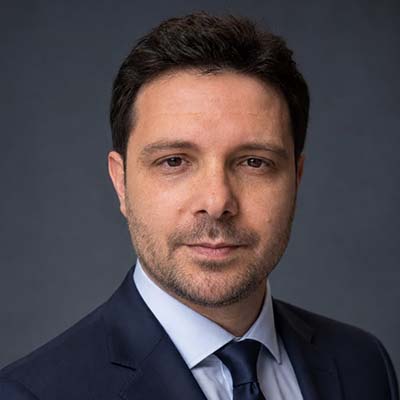
- Caglar Peker
- Senior Corporate Treasury Manager, CoreX Holding
CoreX Holding is a well-diversified, vertically integrated, global industrial conglomerate established in 2024 following its separation from YILDIRIM Group. For CoreX, that de-merger became an opportunity. Rather than adapting an existing set-up, the company used the moment to rethink how treasury should operate and build a future-fit treasury function.
When a company starts life as a standalone business, treasury has little time to settle in. Payments need to keep moving, cash needs to stay visible, and funding needs to support growth.
CoreX Holding operates across eight industries, with a primary focus on metals and mining, ports and terminals, chemicals, green energy, shipping and logistics, infrastructure and construction, international trading, and financial investments. With financial headquarters in Amsterdam, the Netherlands, and operational headquarters in Istanbul, Türkiye, CoreX is active in 33 countries across five continents, employing more than 25,000 people globally. Managing cash, payments and funding across such a diverse organisation requires visibility and consistent processes.
Working with ING, CoreX set out to build a treasury function that fits today’s fast-evolving world, supporting acquisition-driven growth, improving visibility, and creating a consistent way of managing cash across a highly international business.
Designing treasury for growth
As a newly independent organisation, CoreX was in a position to establish a future-ready treasury function without being constrained by legacy structures, while drawing on the experience of an existing treasury team. This created an opportunity to design an operating model around the needs of a global business, using modern technologies and solutions to support future growth.
For international businesses, treasury is inherently complex. Multiple entities, currencies, banking relationships, and local requirements can make it difficult to gain a clear view of cash positions and maintain consistent processes across the group.
To address this complexity, CoreX worked closely with ING to design a centralised operating framework that combined banking infrastructure, treasury expertise, and technology integration. The challenge was to turn its vision of a scalable and resilient treasury function into reality, creating a treasury model capable of providing transparency, oversight, and standardisation across the company.
Re-designing the function from the ground up
For many organisations, a de-merger is primarily about maintaining continuity. CoreX chose a different approach. Rather than recreate the past, the company used the transition as an opportunity to build the treasury model it wanted for the future, combining experienced treasury professionals, modern technology, and a scalable banking infrastructure.
For Caglar Peker, Senior Corporate Treasury Manager, CoreX Holding, the transformation was an opportunity to combine existing expertise with a new approach to treasury design.
“It has been both highly rewarding and demanding,” he acknowledges. “However, we did not start entirely from scratch. The existing treasury team remained in place, enabling us to combine our collective experience with the new CoreX identity and redesign the treasury function from the ground up. This process is enhancing the team’s capabilities, supporting progress in areas such as data processing and centralisation, and, more importantly, delivering meaningful financial benefits to the group.”
Digitisation and acquisition-driven growth were key design principles. Central to CoreX’s objectives was creating a treasury function that could evolve alongside the business while supporting its strategic ambitions for continued expansion.
“Digitisation and acquisition-driven growth are no longer a luxury or simply a sign of success,” continues Peker. “They are a strategic necessity in today’s fast-evolving business environment. At CoreX, we were able to build on the experience and lessons of the past while re-engineering our core treasury processes for a new chapter, combining best-in-class technology with a scalable and resilient banking infrastructure.”
“Together with ING, and through the commitment of our treasury team, we have translated that vision into a practical, value-creating treasury model.
A vision has little meaning without the ability to execute and people who are fully committed to a common goal. This achievement reflects the dedication of a large team that believed in the project and worked with great commitment to deliver it. I would like to thank all our colleagues at CoreX and ING whose commitment and collaboration made this transformation possible.”
Creating a central platform for payments and collections
One of the most important elements of the transformation was the creation of a payment and collection factory in the Netherlands.
To improve visibility and control, CoreX implemented a virtual bank account structure with ING. This enables payments and collections to be managed on behalf of participating entities while maintaining clear tracking of transactions at company level. The result is greater transparency and control across the group.
Payments are processed through virtual bank accounts assigned to each operating company. In practice, this enables treasury to monitor activity at entity level while also maintaining a consolidated view of cash across the group.
This gives CoreX greater transparency over cash movements and liquidity positions, helping treasury make better-informed decisions. The same approach is now being extended to collections, where virtual bank account structures are helping improve reconciliation and visibility over incoming funds.
According to Zsuzsanna Rozsa, Treasury Sales Director, ING Netherlands, close collaboration was critical to the success of the project.
“We were honoured to support CoreX in establishing its central treasury structure in the Netherlands,” she says. “The implementation required close collaboration, flexibility, and continuous alignment between the CoreX and ING teams. This has created a treasury infrastructure that strengthens visibility, efficiency, and control, while forming a strong foundation for future growth.”
Connecting technology, processes and people
Technology also played a key role in bringing the new treasury model to life.
CoreX integrated its TMS, Kyriba, with the wider treasury infrastructure to support payment processing, reporting, and reconciliation. Automated fraud detection and sanctions screening further strengthened controls and governance.
As Peker explains: “The real value comes from connecting technology, processes, and people in a way that ensures better visibility, stronger controls, and more efficient decision-making.”
By embedding technology within a broader treasury strategy, CoreX has been able to support efficiency and control while creating a platform that can evolve alongside the business.
Strengthening liquidity management
Alongside the payment factory, CoreX also implemented ING’s Intercompany Loan Administration (ICLA) solution to manage its intercompany funding more effectively across a multinational organisation. By automating key parts of the process, CoreX improved the tracking and reporting of intercompany transactions while reducing manual activities and enhancing consistency and transparency.
Together, these capabilities form a treasury model that provides visibility over liquidity positions and supports effective cash management and control across the business. Standardised processes have improved governance, while more efficient payment methods and streamlined banking arrangements have helped reduce operational complexity.
As a result, CoreX has established a scalable treasury foundation designed to support the organisation’s continued growth ambitions.
Reflecting on the transformation, Loret Temmerman-Tijhuis, Global Head Accounts and Cash Management. ING, says: “As organisations grow, payments and cash management can quickly become more complex. We were proud to support CoreX in simplifying that complexity and building a future-fit treasury operating model by combining our virtual bank account structure with ING’s Intercompany Loan Administration solution.”
Building for what comes next
De-mergers and organisational separations are often viewed primarily as operational challenges. For CoreX, they also represented an opportunity.
Rather than replicate existing structures, the company chose to reassess how treasury should operate and build around the needs of a modern, international firm. From centralised payments and collections to integrated technology and stronger liquidity management, the transformation focused on creating a treasury function that could grow alongside the business.
For organisations navigating major changes, the experience offers a valuable lesson: treasury transformation is about more than maintaining continuity. Done well, it creates opportunities to operate more efficiently, move beyond day-to-day operational pressures, and establish strong foundations for strategic planning, growth, and long-term resilience.